 |
 |
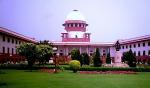
| The Supreme Court of India |
|
INDIA: SUPREME COURT STAYS THREE DEATH SENTENCES, ORDERS FULL MITIGATION INQUIRY
April 16, 2026: A three-judge bench of the Indian Supreme Court on 13 April 2026, stayed a death sentence awarded to three convicts in a case from Dakshina Kannada. A trial court had convicted them and sentenced them to death in October 2024 for rape and murder under the penal code and the Protection of Children from Sexual Offences (POCSO) Act, 2012.
On 6 February 2026, a Division Bench of the Karnataka High Court confirmed the trial court’s decision.
The Supreme Court left the conviction of the appellants untouched and reopened the sentencing question on two grounds: the High Court loosely engaged with the mitigation question in a single paragraph, and a third form of punishment—viewed as an alternative between ordinary life imprisonment and death penalty—was unconsidered.
Staying the death sentence, the Supreme Court Bench of Justices Vikram Nath, Sandeep Mehta and N.V. Anjaria directed the Karnataka government to file three sets of reports within 16 weeks. A probation-officer’s report on each appellant, a jail-conduct report from Shivamogga Central Jail and a psychological evaluation by a team at the Shivamogga Institute of Medical Sciences.
It directed that Komal, Mitigation Associate at the Square Circle Clinic, be granted confidential access to the appellants. She was directed to file a Mitigation Investigation Report within 20 weeks. The matter has been listed for hearing after 20 weeks.
The appellants are Jayban Adivasi, also known as Jay Singh, Mukesh Singh and Manish Thirki, aged 25, 23 and 42 respectively. Jay and Mukesh Singh are from the Panna district in Madhya Pradesh. Thirki hails from Ranchi.
All three migrated for work to a tiles factory at Perari, Vamanjoor, near Mangaluru. The crime, which took place at Ulaibettu, drew widespread public attention.
The High Court’s confirmation record did not contain details of the probation-officer’s report, their school or literacy record, their socio-economic profile, their psychiatric assessment and their jail-conduct certificate from Shivamogga Central Jail—where the three have been lodged since late 2021.
The High Court’s entire engagement with mitigation occupies paragraph 161 of the judgement: “No doubt, the accused persons are young aged and the same cannot be a ground to come to a conclusion that they could be imprisoned for life and age is not a determinative factor by itself and except this circumstance, there is no other mitigating circumstances.” Paragraph 162 closes: “there are no mitigating circumstances favouring the accused to reduce the sentence. (Source: scobserver, 14/04/2026)
|