|
IRAN - 2025 Annual Report on the Death Penalty in Iran
April 13, 2026: April 13, 2026 - IRAN. 2025 Annual Report on the Death Penalty in Iran
At least 1,639 people executed
Other ‘year-end reports’, previously published by HoC, have given different figures: according to the NCRI, there were at least 2,200 executions (see 31 December 2025); according to Hrana, 2,063 (6 January 2026); for Iran-HRS 2,228 (9 January 2026). Hands off Cain reported a total of 2,226 executions for 2025.
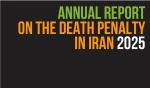
The 18th Annual Report on the Death Penalty in Iran, published by Iran Human Rights (IHRNGO) and Together Against the Death Penalty (ECPM), reveals an unprecedented escalation in the use of the death penalty by the Islamic Republic of Iran in 2025. At least 1,639 people were executed, marking the highest number of recorded executions since 1989 and a dramatic 68% increase compared to 2024, when 975 executions were recorded. This is the continuation of the execution surge that began after the “Woman, Life, Freedom” nationwide protests in 2022, illustrating the authorities’ continued reliance on the death penalty as a tool to instill fear and deter new protests.
Commenting on the unprecedented number of executions in 2025, IHRNGO Director Mahmood Amiry-Moghaddam said: “By creating fear through an average of 4–5 executions per day in 2025, authorities tried to prevent new protests and prolong its crumbling rule. But by the end of the year, people took to the streets again to demand their fundamental rights, demonstrating the failure of the policy of the gallows. This is an important signal to the current and any future leaders.”
A large proportion of those executed belonged to the most marginalised sectors of Iranian society. Nearly half of the executions were for drug-related offences, while hundreds were carried out under qisas (retribution-in-kind) laws for murder charges. As poverty being the underlying factor, ethnic minorities were disproportionally impacted. This is while the right to access counsel, due process and fair trial rights were systematically breached, often in violation of the Islamic Republic’s own laws.
The report also highlights several alarming trends in the use of the death penalty in 2025. At least 48 women were executed, the highest number recorded in at least two decades. The Islamic Republic also continued to target foreign nationals, executing at least 84 Afghan nationals, three Iraqi nationals and a man only referred to as a “foreign national.” In addition, 11 executions were carried out in public spaces, where children were amongst the spectators, a practice intended to spread fear and reinforce the state’s policy of intimidation.
Commenting on the findings of the report, Raphaël Chenuil-Hazan, Executive Director of ECPM, stated: “The death penalty in Iran is used as a political tool of oppression and repression, and ethnic minorities and marginalised groups are disproportionately represented among those executed. In 2025 alone, at least 795 people were executed for drug-related offences, many sentenced by Revolutionary Courts after grossly unfair trials and without due process. Despite this unprecedented surge, the UN Office on Drugs and Crime (UNODC) has failed to show a strong reaction. Such large-scale executions for drug offences may amount to crimes against humanity, and the UNODC must ensure that its cooperation does not contribute to these crimes and must do everything within its mandate to help prevent them.”
In a statement issued in October 2025, the UN Fact-Finding Mission expressed its alarm by the extraordinary spike in executions. “If executions form part of a widespread and systemic attack against a civilian population, as a matter of policy, then those responsible – including the judges who impose capital punishment – may be held accountable for crimes against humanity,” said Fact-Finding Mission expert Max du Plessis.
Despite the dramatic rise in executions, opposition to the death penalty inside Iran continues to grow. The “No Death Penalty Tuesdays” movement, which began in one Iranian prison, has now entered its third year with 56 Iranian prisons joining, gaining increasing support among Iranian civil society and the international community. In October 2025, drug death row prisoners staged a six-day strike in Ghezel-Hesar Prison, forcing authorities to halt drug executions at the prison. This grassroots movement represents an important turning point in the Iranian abolitionist movement.
This report is published at a time when the Iranian people were subjected to the largest mass killing of protesters in the Islamic Republic’s history in January. At the time of writing, they are living under the fear and anxiety of daily bombardments amid an ongoing war. Hundreds of detained protesters remain at risk of death sentences and execution. Periods of crisis and conflict have historically provided the authorities with opportunities to intensify repression and carry out executions away from international scrutiny.
The future of the Islamic Republic remains uncertain. It has no legitimacy among the absolute majority of the Iranian population and is weaker than at any time in its history. If it survives the current crisis, there is a serious risk that executions will be used even more extensively as a tool of oppression and repression. The international community must therefore make the abolition or the restriction of its use to the most serious crimes, a central demand in any dialogue or negotiations with the Iranian authorities.
If political change does occur, the abolition of the death penalty must also be a central demand directed at any transitional government. In times of transition, public anger may generate strong support for executions of officials associated with the ousted government. However, Iran’s own experience after the 1979 Revolution demonstrates the dangers of such an approach.
Commenting on the importance of abolition in any future transition, Mahmood Amiry-Moghaddam said: “History has shown that executions carried out in the name of justice during times of transition can quickly become tools of repression and are in violation of the right to truth. If Iran is to avoid repeating the tragic cycle that followed the 1979 revolution, the abolition of the death penalty must be a fundamental principle of any future democratic system.”
In this context, IHRNGO has initiated dialogue among Iranian opposition actors on minimum human rights principles for a future Iran. A number of political parties and groups participating in this process have already taken a principled stance against the death penalty (see page xx). Establishing a broad consensus among the Iranian opposition on the abolition of the death penalty will be essential to breaking the cycle of violence that has characterised Iran’s modern political history.
With the publication of this report, IHRNGO and ECPM call on the international community, including the United Nations, governments with diplomatic relations with Iran, and international organisations, to place the abolition of the death penalty at the centre of their engagement with Iran and to support the growing abolitionist movement inside the country.
2025 Annual Report at a glance
- At least 1,639 people were executed in 2025, a 68% increase compared to 2024 when 975 executions were recorded, and the highest number of recorded executions since 1989.
- Only 113 executions (under 7%) were announced by official sources compared to 9.7% in 2024 and 15% in 2023.
- Over 93% of the executions recorded, i.e. 1,524 executions, were not announced by the authorities.
- 795 people (48.5%) were executed for drug-related offences, a 58% increase compared to 2024 (503)
- Only 3 (0.18%) of the 795 drug-related executions were announced by official sources.
- 747 people (45.6% of all executions) were sentenced to qisas (retribution-in-kind) for murder, a 79% increase compared to 2024 (419).
- 37 people were executed for rape charges.
- At least 57 people were executed for the security charges of baghy (armed rebellion), efsad-fil-arz (corruption on earth) and moharebeh (enmity against God). They include 2 protesters, 18 political prisoners, 13 espionage defendants and a person convicted of financial corruption.
- The charges against three people are unknown.
- At least 48 women were executed, the highest number recorded in more than 20 years and a 55% increase compared to 2024 (31).
- 11 of the executions took place in public spaces.
- At least 84 Afghan nationals were executed in 2025, compared to 80 in 2024, 25 in 2023 and 16 in 2022.
- 852 (52%) executions in 2025 and more than 5,972 executions since 2010 have been based on death sentences issued by the Revolutionary Courts.
- At least 566 prisoners sentenced to qisas for murder charges were forgiven by the families of the murder victims per qisas laws.
From IHRNGO’s first annual report in 2008 to 2025, Iranian authorities have executed at least 11,196 people, an average of 622 executions per year. The number of executions in 2025 is the highest annual execution number recorded by IHRNGO and the highest reported number since 1989.
The monthly execution breakdown illustrates a high disparity between the number of officially announced and unannounced executions throughout the year. With 63 and 85 executions respectively, March and February had the lowest number of executions. However, 62 executions in the Muslim month of Ramadan (1-30 March) which coincided with Nowruz, the Iranian new year, is unprecedentedly high. With 222 executions, October was the bloodiest month in 2025, followed by September and May, with 188 and 168 executions, respectively. 60% of the executions took place in the second half of the year.
The majority of those executed in Iran are sentenced to death for ordinary crime offences. However, IHRNGO’s data indicate a meaningful correlation between the timing of executions and political developments. Execution numbers tend to increase when authorities fear social unrest and when the attention of the international community is focused on other geopolitical issues. Conversely, executions typically decline in the period preceding elections, as well as during major cultural and religious occasions such as Nowruz and the Muslim month of Ramadan. Since the “Woman, Life, Freedom” nationwide protests in 2022, the number of executions in Iran has steadily increased. Following the assassination of Hezbollah leader Hassan Nasrallah on 27 September 2024 and the subsequent escalation of tensions between the Islamic Republic and Israel, the surge in executions intensified further. The overall level of executions remained high throughout 2025. Notably, even during periods when executions typically decline, the numbers remained unusually high. In March 2025, despite the coincidence of both Ramadan (1-30 March) and Nowrouz holidays beginning on 21 March, the number of executions was unprecedentedly high. A new surge in executions began in the months after the 12-day war between Iran and Israel in June, and remained at a higher level for the remainder of the year.
https://iranhr.net/en/articles/8673/
https://iranhr.net/media/files/2025_Annual_Report_on_the_Death_Penalty.pdf (Source: IHR)
|