
27 January 2026 :
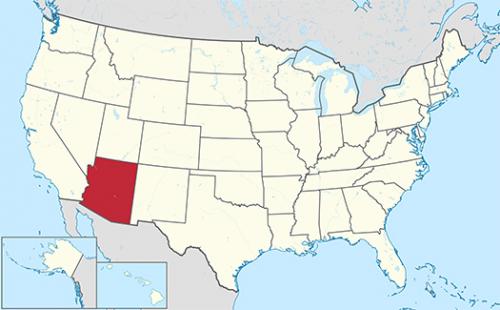
January 25, 2026 - Arizona. Series of Botched Lethal Injections Highlights Debate Over Execution Methods
A series of botched executions in Arizona is reigniting national debate over how states carry out the death penalty, following findings that lethal injection procedures have repeatedly gone wrong.
According to a Jan. 21, 2026, news report by the Death Penalty Information Center, an autopsy conducted by Pinal County Chief Medical Examiner Dr. John Hu found that the October 2025 execution of Richard Djerf was severely malexecuted, with several misplacements of intravenous lethal injections.
Djerf was convicted of the murder of 4 people in Phoenix in September 1993. According to the autopsy, Djerf had several puncture points, implying difficulty in establishing an IV line.
Djerf’s execution is just 1 in a series of problems in Arizona’s lethal injection program. According to Hayley Bedard of the Death Penalty Information Center, “Between 2010 and 2022, medical teams failed to secure IV lines in the arms of 11 of 16 prisoners and resorted to insertion into the femoral artery, located near the groin.”
One of these executions was that of Frank Atwood in June 2022, who was convicted in 1987 for the kidnapping and murder of an 8-year-old girl in Arizona. According to a news report by the Death Penalty Information Center, Atwood’s execution team failed to insert the injection into an IV line in his arm “several times.”
The team ultimately decided, on the suggestion of Atwood himself, to insert the injection into his hand, which effectively killed Atwood.
Arizona Gov. Katie Hobbs, in light of these botched executions, ordered an independent review of the state’s execution process. A little under 2 years later, Attorney General Kris Mayes announced that the state would resume seeking execution warrants following reforms implemented by the state’s lethal injection program.
Retired federal Magistrate Judge David Duncan was “abruptly terminated” by Hobbs during his independent review of the state’s execution program. Hobbs said an internal report by the execution program — the Arizona Department of Corrections, Rehabilitation and Reentry — satisfied her concerns.
Judge Duncan, protesting his removal, questioned whether he would recommend alternative execution methods.
As of October 2025, capital punishment remains popular among a majority of Americans, according to Gallup. But questions about the method of execution remain more divided.
Lethal injections are often viewed as a more humane alternative to traditional execution methods, such as hanging or the electric chair, according to a history of lethal injections in the United States by Human Rights Watch. However, as incidents like those in Arizona reach national news circles, the “humanity” of lethal injections has become more controversial.
In 2014, Oklahoma death row prisoners sued the state government, claiming the frequency of botched lethal injections imposed grounds for them being “cruel and unusual punishment,” or unconstitutional. The U.S. Supreme Court ruled in a 5-4 decision in favor of Oklahoma.
As recently as October 2025, some states have begun opening opportunities for other means of execution. While lethal injection remains by far the most common method in states issuing capital sentences, states such as North Carolina have implemented legislation removing bans on electrocution and lethal gas for executions, according to a 2025 legislation roundup report by the Death Penalty Information Center.
As President Donald Trump has spearheaded a national effort to reaffirm capital punishment across the country, questions about execution methods are unlikely to fade, as the humanity of capital punishment remains a central issue.
https://davisvanguard.org/2026/01/lethal-injection-controversy-arizona-deaths/