
02 January 2026 :
We receive from Elisabetta Grassia, a friend of Hands off Cain, and a real expert on African affairs having worked for a quarter of a century as a manager in cooperation projects, an interesting article on the evanescence of some European interventions in Africa.
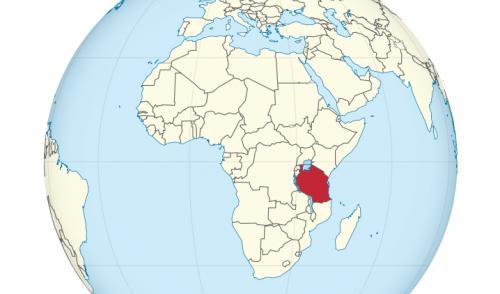
Grassia tells of her most recent experience in a country that Cain is following closely, Tanzania.
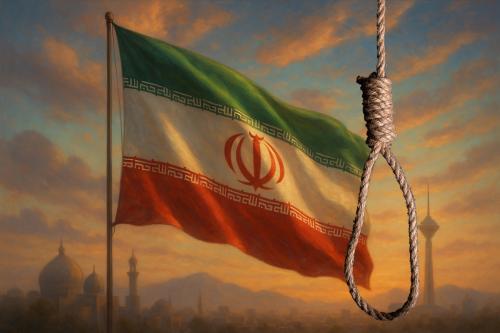
As we have written in various updates in recent months, Tanzania is the nation where opposition leader Tundu Lissu is apodictically accused of high treason and locked up on death row;
where, immediately before the 29 October 2025 elections, the two main opposition camps, using improvised orders from the judiciary, were ordered to be struck off the electoral rolls;
where, immediately after the 29 October elections, many citizens took to the streets to protest against the apparent irregularities, and the protest was suppressed, killing hundreds of unarmed people;
where China is currently investing $1.4 billion in infrastructure, and Russia $1.2 billion for Uranium mining.
In the face of all this, the EU seems to want to prioritise LGBTIQ+ rights. What follows is an examination of the little impact these European initiatives seem destined to have.
(Trans)gender ideology and the defence of human rights: European geo-politics in East Africa
This article is intended as an invitation to reflect on how extreme concepts of democracy are trespassing into a dissociated and dysfunctional view of reality. Disassociation that in East Africa is visible in a European geo-political strategy aimed at persuading Africans on issues of very little sustainability: on the one hand convincing them to distrust both Russia and China, and on the other pushing them to accept transgender ideology. This is seen by some as the natural evolution of gender theory and on which they persevere with surprising vigour compared to the instead feeble denunciation of violations of fundamental human rights. On the defence of the latter, a certain prudence on the part of the EU is in fact noticeable, as insisting on it entails the danger of neutralising diplomatic efforts in the geo-political sphere. In fact, since human rights are not a priority in Russian and Chinese policies, the defence of the same on the European side denotes a particularly cautious tactic in dealing with certain issues. A caution that can be seen in the way serious violations are blamed in states where political opposition is systematically persecuted and silenced as well as information. This is the case in all East African countries where de facto multipartyism does not exist. However, some one-party systems are better tolerated as “friends of the West”, see the case of Rwanda where Kagame, in office since 2000, was re-elected for his fourth presidential term in July 2024. In others, such as Tanzania, high-ranking diplomats denounce the one-party democracy as if it were a novelty or an exception. A “blatant double standard” that is certainly not new in European foreign policy, as recently denounced by the 2,000 or so officials of the “EU staff for Peace” group regarding the manifest inequality of approach in handling the humanitarian crisis in Gaza compared to support for Ukraine. Apparently, it is bad enough for Europe's strategists to sacrifice an otherwise dutiful denunciation of trampled human rights in the name of the unlikely prospect of being able to “convert” African rulers to the idea of Putin and Xi Jinping's dangerousness. As if the BRICS coalition did not have the support of most of the continent, as if the former USSR had not been a crucial ally in the anti-colonial liberation struggles. Not to mention here the ongoing French attempt at anti-Traoré propaganda. In this context of deafening silences on serious violations of fundamental rights for reasons of political-economic expediency, the defence against LGBT discrimination stands out for its singularity. It is here that the dysfunctionality of the European strategy is fully displayed in contexts where the anti-homosexual narrative is used as a dutiful anti-colonialist stance, with the false claim that freedom of sexual orientation is a Western or neo-colonial argument. On the contrary, numerous studies and research attest to how colonialism, first and foremost Victorian colonialism, introduced the moral condemnation of homosexual practices along with the attack on polygamy and out-of-wedlock or pre-marital relationships. 'Native' practices and as such branded as savagery and perversion. After independence, the political populism of the newly-elected had an easy time condemning homosexuality as a phenomenon of colonial influence, a position that has hardened over the years also as a result of a growing Islamic presence of a conservative and non-tolerant matrix. Never before has the adoption of discriminatory laws against homosexuality intensified in several African states as before the 2000s. In these same years, the acronym LGBTI appeared, to which a Q (Queer) and a “+” sign were recently added to indicate various other gender identities. While establishing the cause and effect link between the spread of the acronym and the exacerbation of aversion to the categories it encompasses remains a speculative endeavour, it is legitimate to ask to what extent this acronym itself reinforces stigma rather than protection for the very groups it purports to safeguard. The insistent defence of the group and the specific acronym LGBTIQ+ sacrifices clearer positions in defence of every person's inalienable right to freedom of choice and expression based on non-discrimination and tolerance as universal values of all humanity. Stubbornly insisting on an acronym even though it provokes an automatic closure to dialogue begs the question: great naivety or inappropriate obstinacy? In either case, the critical point concerns the viability of a system - the European system - plagued by glaring contradictions and, as such, less and less credible. The answer is not based on a bigoted conservatism in rejecting so much emancipation (considering the latest developments in transgender culture in the West, where some states have adopted legislation that defends underage children from “despot” parents in cases where they wish to change sex without parental consent) but on an interdisciplinary approach, such as that expressed by Systems Theory. This tells us that the existence of a system depends on an unspecified number of elements that are independent of each other but interconnected and on whose more or less balanced interaction the existence itself depends. This dynamic equilibrium is constantly changing on the basis of changes that can be either functional or dysfunctional to the system. Dysfunctional changes are those that take a direction opposite to that of equilibrium and which, when taken to extremes, can lead the entire system to decay and, progressively, to its end. When a case of degeneration occurs in which the alteration or modification of elements leads the process towards an irreversible end, attempts to restore the equilibrium may require a great deal of energy (a.k.a. resources financed by European taxpayers) up to the so-called “threshold limit” below which the effort no longer makes sense because every attempt is futile. Well, "when this minimum threshold is reached, the best option is to let the system collapse. In this way, further excessive waste of energy is avoided and space is left for the birth of a new system, more harmonious with life and its needs."[1]
Here, with the obsession with transgender advocacy, this threshold has been crossed. The Europe of the Enlightenment, of the highest forms of philosophical, scientific, artistic and spiritual thought, has chosen to launch itself into a strenuous defence of the extreme. Not of the essential, with the decisive affirmation of universal values such as tolerance, non-discrimination, freedom of choice and expression. Not the assurance at all costs of the defence of fundamental principles won by all mankind, but a kind of entrenchment to protect a minority group that, in Africa, is equivalent to 3.57% of the population of almost one and a half billion.
Defending freedom of sexual orientation is a duty on a par with the defence of universally recognised rights; however, in view of the manifest hostility and intolerance of most African governments and public opinion (of the 76 countries in the world that criminalise same-sex relations, as many as 38 are in Africa) to persist in using an acronym, besides being objectively dysfunctional, is against all logic of a Euro-African partnership based on credibility and sustainability.
Elisabetta Grassia