
27 January 2026 :
January 26, 2026 - IRAN. Hrana Report on 30th day of protests: 6,126 confirmed deaths, 17,091 under investigation
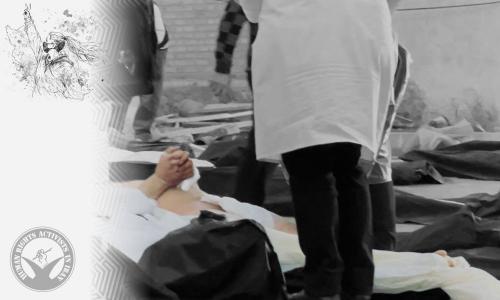
According to the latest aggregated data compiled by HRANA, on the thirtieth day since the start of the protests, the total number of confirmed deaths has reached 6,126. Of these, 5,777 were protesters, 86 were minors under the age of 18, 214 were forces affiliated with the government, and 49 were non-protesters or civilians. The number of deaths still under investigation stands at 17,091.
The total number of arrests has reached 41,880, the number of severely injured individuals 11,009, and 245 cases of forced confessions broadcast have been reported. The number of individuals summoned by security institutions is 11,024. Overall, 651 protest-related incidents have been recorded across 200 cities in 31 provinces.
On the 30° day of the protests, the continuation of communication control policies, the ongoing wave of arrests, and growing concerns over the safety of medical centers for the injured have been among the most significant developments. In addition, government pressure on journalists and the transfer of injured protesters from hospitals to detention facilities persisted, prompting international reactions.
Ongoing Internet Disruptions and Shutdowns: Pressure on Information Flow and Economic Impact
On the thirtieth day of the protests, widespread internet disruptions and shutdowns have remained one of the government’s main tools for restricting the flow of information and reducing protesters’ ability to organize. NetBlocks has reported that the internet shutdown has entered its eighteenth day, while restrictions on circumvention tools have simultaneously intensified. This situation has effectively caused serious disruption to citizens’ access to information, communication with family members, online services, and independent media. In this context, Iran’s Minister of Communications, referring to the economic consequences, stated that the cost of the internet shutdown amounts to “five trillion tomans per day” (approximately 35 million dollars). Beyond its impact on online businesses, this figure reflects direct repercussions for household livelihoods and small and medium-sized economic activities.
At the same time, Sazandegi newspaper, in an analytical report, described the nationwide internet shutdown as a sign of policy failure and a crisis in communications governance. It emphasized that broad blockage not only prevents the transmission of news and images about the protest situation, but also leads to declining public trust, heightened uncertainty, and deepening economic damage.
Meanwhile, the International Federation of Journalists has issued statements in response to the security forces’ crackdown on journalists and media activists, reporting the arrest of two photojournalists: Hamed Araghi, arrested in Tehran, and Artin Ghazanfari, arrested in Mashhad following a search of his home and the seizure of his equipment. This stance, alongside the ongoing internet shutdown, presents a clear picture of the government’s systematic efforts to control the public narrative: cutting communications to limit the spread of news, while simultaneously arresting and pressuring journalists and photographers to restrict content production and on-the-ground documentation. Taken together, developments on the thirtieth day of the protests show that information control remains one of the central pillars of the repression policy, extending beyond “filtering” to “complete blockage,” “increased social and economic costs,” and the “securitization of media activity.”
Escalation of Mass Arrests and Intensified Security Measures
In recent days, reports indicate widespread arrests across various cities. Alongside scattered detentions of citizens in multiple locations, news has emerged of the arrest of more than 300 citizens in Semnan Province, as well as the detention of at least 54 citizens in cities including Yazd, Zanjan, and Malard. On an individual level, cases such as the arrest of a poet and writer in Tehran and the arrest of a Bahá’í citizen in Mashhad (followed by transfer to Vakilabad Prison) reflect the wide range of individuals targeted by security measures.
Security measures have not been limited to arrests alone, with labor activists, religious minorities, and athletes also facing pressure, alongside efforts to control the flow of information. Reports also point to the ongoing broadcast of “forced confessions” as part of an intimidation strategy and the state’s narrative-building around the protests, while some arrests have been accompanied by families being kept uninformed of detainees’ whereabouts. Taken together, these developments indicate that on the thirtieth day of the protests, security agencies continue to pursue an approach centered on mass arrests, intimidation, and control of the narrative.
Statistics
- Number of recorded gatherings/protests: 651
- Number of cities (no repetition): 200
- Number of provinces (no repetition): 31
- Total arrests: 41,880
- Arrested students: 62
- Broadcast of forced confessions: 245
- Summoned to intelligence/security agencies: 11,024
- Severely injured individuals: 11,009
- Confirmed fatalities: 6,126
- Protesters: 5,777
- Minors (under 18): 86
- Forces affiliated with the government: 214
- Non-protesters/civilians: 49
- Fatalities under investigation: 17,091
Concerns Over Seeking Medical Care and Reports of the Pursuit and Arrest of the Injured
One of the key developments in recent days has been the growing number of reports about injured individuals fearing visits to medical centers, as well as reports of wounded protesters being pursued and arrested in hospitals. Iran’s Ministry of Health has implicitly acknowledged the existence of such concerns and, while emphasizing that seeking treatment at medical facilities “poses no concern,” has urged the injured to refrain from treating themselves at home. In this context, it has been stated that approximately 3,000 injured individuals have sought medical care at treatment centers in recent days.
At the same time, the UN Special Rapporteur on the situation of human rights in Iran has expressed serious concern over numerous reports of the “abduction of injured individuals from hospitals” and their transfer to detention facilities, describing these actions as a clear violation of the right to access medical treatment. According to published accounts, security forces identify individuals wounded in connection with the protests and remove them from hospitals for arrest. This practice not only discourages the injured from seeking medical care, but also increases the risk of aggravated injuries and higher mortality due to lack of treatment. In addition, reports have emerged of pressure on medical staff, including threats or arrests of doctors and nurses who have treated the injured. In response, more than 4,000 physicians have signed a statement condemning security forces’ crackdown with medical personnel. These conditions indicate that in recent days, the “medical space” itself has become securitized, and free and safe access to healthcare is facing serious threats.
Domestic Positions, Denials, and Official Narratives
The hardline, pro-regime newspaper Kayhan has strongly opposed proposals for the “pardon or release of detainees,” effectively rejecting any form of retreat in the face of the protests. This stance can be interpreted as an effort by the government’s hardline factions to prevent the emergence of fractures within the ruling establishment and to preserve a security-driven, repressive policy. By emphasizing harsh measures against protesters, Kayhan effectively calls on the government to continue arrests, threats, and control of the public sphere rather than pursuing de-escalation.
On the other hand, Tehran Province Prisons Organization has denied reports regarding the detention of injured protesters in Fashafuyeh Prison and their lack of access to medical services. These official denials come despite numerous reports of families being kept uninformed, concerns over detainees’ health conditions, and difficulties in accessing medical care. Given past experiences with officials’ statements, as well as media and human rights reports, these denials have been met with serious doubt, particularly as simultaneous United Nations reports emphasize the abduction of injured individuals from hospitals and their transfer to detention facilities.
Alongside these developments, some local and security officials have also sought to present a more acceptable narrative of the deadly crackdown by citing casualty figures from both sides of the conflict. For example, the commander of the IRGC in Lorestan Province reported that 334 people were injured during protests in the province and also cited the deaths of two IRGC members and three Basij forces. This type of narrative-building is typically aimed at highlighting casualties among government forces and creating justification for intensified repression. Reports of widespread arrests in certain provinces (including Semnan) have also been published, indicating the continued reliance on a security-based approach to managing the protests.
Overall, the government’s domestic positions on the thirtieth day of the protests can be summarized as follows: denying or rejecting reports of human rights violations against protesters in prisons and medical centers; emphasizing threats and harsh measures through outlets such as Kayhan; presenting security-driven narratives of the protests by commanders and officials; and maintaining arrests and pressure as primary tools of social control. These positions indicate that the government continues to frame the situation as a national security crisis, with no signs of reduced violence or a move toward accountability.
In Conclusion
The thirtieth day of the nationwide protests passed amid the continued shutdown and disruption of internet access as a constant element of the policy to control narratives. At the same time, widespread arrests, an increase in summonses, and the ongoing broadcast of forced confessions were reported. Concurrently, concerns over the safety of medical centers for the injured and reports of the pursuit and arrest of wounded individuals have generated new human rights concerns regarding the right to access medical care. Domestically, some media outlets and official bodies have emphasized the continuation of a hardline approach, while reports on the condition of detainees and the injured have been met with official denials. Collectively, these developments indicate that on the thirtieth day as well, repression and communication control continued, the cumulative figures indicate that the social consequences of this crackdown are becoming increasingly widespread.