
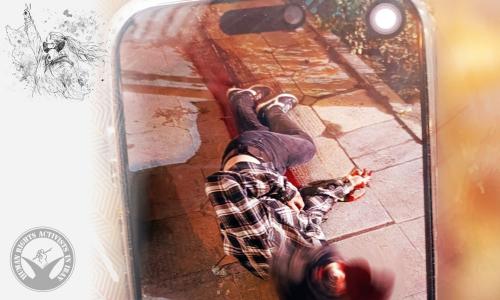
25 January 2026 :
January 24, 2026 - IRAN. Hrana Report on 28th day of protests: 5,459 confirmed fatalities, 17,031 deaths currently under investigation
The total number of arrests has risen to 40,887
Day 28 of the Protests: Arrests, Uncertainty Over Detainees’ Fate, and International Calls for Accountability
According to HRANA’s latest aggregated data on the twenty-eighth day of the protests, the total number of confirmed fatalities has reached 5,459. Of these, 5,149 were protesters, 60 were minors under the age of 18, 208 were government-affiliated forces, and 42 were non-protesters or civilians. The number of deaths currently under investigation stands at 17,031.
The total number of arrests has risen to 40,887, including at least 325 minors and 54 university students. The number of severely injured individuals has been reported as 7,403, and 205 cases of forced confessions being broadcast have been documented. The number of individuals summoned by security agencies has reached 11,023. In total, 641 protest-related incidents have been recorded across 195 cities in 31 provinces.
On the twenty-eighth day of the protests, developments focused on the issuance of a resolution by the Human Rights Council, the continued policy of restricting communications, and the rising figures related to the suppression of protesters.
Escalation of Arrests and Targeted Repression
On the 28th day of the protests, targeted arrests and security pressure on citizens, activists, and the families of protesters continued in an overt, though dispersed, manner. Verified reports from various provinces indicate that security agencies are seeking to monitor and identify protesters or those with prior records, and subsequently summon them. Their focus has been primarily on major cities and areas that have witnessed the highest levels of demonstrations in recent days.
In addition to street and mass arrests, a new pattern of so-called “home arrests” and raids on residences, workplaces, and even schools and universities has been observed. Over the past 24 hours, several arrests have been reported in Tehran, Shiraz, Kerman, Rasht, Semnan, Islamabad-e Gharb, and even smaller towns. The names of a number of detainees, including students and teachers, labor activists, Yarsani and Baha’i citizens, and even adolescents under the age of 18, have been published by human rights media outlets and HRANA News Agency. In some cases, security forces, after making arrests, have confiscated electronic devices, mobile phones, and even books and personal belongings.
Meanwhile, some detainees have faced charges such as “leading protests,” “communicating with foreign media,” or “acting against national security.” At least five new forced confession videos were broadcast over the past day by media outlets affiliated with security institutions. These confessions are often obtained under unclear conditions, without access to an independent lawyer, and under pressure.
Credible reports have also emerged regarding the collective transfer of detained women and teenage girls to the political ward of Adelabad Prison in Shiraz, despite severe shortages of facilities and capacity, raising serious human rights concerns. Families of detainees seeking information about the condition of their loved ones have faced obstruction, threats, and even summonses, and in some cases have been compelled to provide written pledges to remain silent or refrain from speaking to the media.
The pressure has not been limited to arrests; summonses to security institutions and threatening phone calls and text messages have also taken on new dimensions. HRANA’s aggregated data indicate that more than 11,000 individuals have been summoned by security agencies to date. In some cities, teachers, students, workers, and even figures from the arts and sports communities have been targeted.
Continued Internet Disruptions and Shutdowns and Their Negative Impact on Information Flow and Daily Life
On the 28th day of the protests, widespread disruptions and a nationwide internet shutdown in Iran remained one of the government’s primary security measures. According to updated reports from NetBlocks and field data, Iran has been in a state of “communications blackout” for the third consecutive week, with the total duration of internet outages exceeding 375 hours. Over the past day, only for brief periods were some users able to connect to the international internet through censorship-circumvention methods (tunneling or VPNs), and a limited number of platforms were temporarily exempted from filtering; however, this access was neither stable, nationwide, nor free.
Technical data published by NetBlocks emphasize that, contrary to claims by some state-affiliated media regarding a “40 percent restoration of internet access,” independent evidence and user assessments confirm only very limited, costly, and high-risk connectivity. According to human rights media, the communications blackout and the lack of free internet access have had direct consequences for documenting human rights violations, tracking the situation of detainees and the injured, and for everyday life, from work and education to healthcare services.
Even many field reports (such as the Rasht bazaar fire or the intensity of repression in Ahvaz and certain neighborhoods of Tehran) have been published with delays of several days, as journalists and families have faced extreme difficulty in sending images, videos, or firsthand accounts. Union and civil organizations, including the Tehran Journalists’ Association and the Iranian Sociological Association, warned that this situation has placed the media under pressure and deprived society of independent documentation of events.
Technology experts and digital rights activists assess this blackout not as a technical malfunction, but as a deliberate tool for control, intimidation, and preventing the spread of collective action and the free flow of information. Internet shutdowns have not only disrupted protests, but have also paralyzed the economy, education, healthcare, and even family communication in an unprecedented manner. Some have stressed that aside from Sudan’s 2021 coup, no nationwide internet shutdown of this scale and duration has been recorded.
Overall, on the twenty-eighth day of the protests, Iran remains in a situation where the communications blackout continues to be an inseparable part of the strategy of repression and narrative control, with citizens’ access to a free information space restricted to an unprecedented degree. This situation signals, not only for reporters and independent institutions but for society as a whole, the emergence of a new phase of control and obstruction in response to the wave of protests.
Civil and International Reactions
In recent days, civil and international reactions to the widespread repression of protests in Iran have continued to expand. Reports indicate that the voice of civil society, both inside and outside the country, has grown stronger, emphasizing government accountability and support for the demands of protesters.
At the domestic level, statements and collective responses from various professional and civil groups have continued. In a statement, the Board of Directors of the Iranian Sociological Association, referring to the killing of thousands of citizens and expressing deep concern over the current situation, called for an immediate halt to the cycle of violence, respect for civilian lives, and a serious reassessment of the government’s policy-making paths. The association emphasized that Iranian society is facing an accumulation of crises and an erosion of social cohesion, and that the normalization of death and violence will have devastating effects on public trust and the possibility of future coexistence. The Teachers’ Trade Association of Islamabad-e Gharb also issued a statement condemning the arrest of Abdollah Rezaei, a labor activist and a board member of the Harsin Teachers’ Trade Association, stressing that silence in the face of injustice amounts to complicity with the apparatus of repression.
At the international level, the dimensions of Iran’s crisis have become one of the main focal points for human rights bodies and global media. At an emergency session of the Human Rights Council held yesterday, the UN High Commissioner for Human Rights warned of the unprecedented scale of street killings, reported the continued repression and the deaths of thousands of people, including minors, and emphasized that violence against protesters has turned into “the deadliest crackdown in Iran’s contemporary history.” The UN Special Rapporteur on the situation of human rights in Iran and the head of the Human Rights Council’s fact-finding mission, expressing alarm at field observations, called for accountability and independent investigations.
In connection with these developments, the European Parliament also adopted a resolution condemning the repression of protests, calling for the Islamic Revolutionary Guard Corps to be designated as a terrorist organization by the European Union and for sanctions to be imposed on officials of the Islamic Republic.
In addition, a number of well-known international figures, artists, athletes, and civil activists, have expressed support for the Iranian people’s protests through messages on social media and warned against the continuation of repression. These widespread reactions, occurring alongside the government’s efforts to restrict access to information and shut down the internet, have further underscored the importance of amplifying independent voices inside and outside the country.
Statistics
- Number of recorded gatherings/protests: 641
- Number of cities involved (no duplicates): 195
- Number of provinces involved (no duplicates): 31
- Confirmed fatalities: 5,459
- Protesters: 5,149
- Minors (under 18): 60
- Government-affiliated forces: 208
- Non-protesters/civilians: 42
- Fatalities under investigation: 17,031
- Severely injured: 7,403
- Total arrests: 40,887
- Arrests of individuals under 18: 325
- Arrested university students: 54
- Broadcasts of forced confessions: 205 cases
- Summonses to security agencies: 11,023 cases
Summary
The 28th day of the protests passed amid unprecedented levels of repression, a nationwide internet shutdown, widespread arrests, particularly of adolescents and women, economic pressure, and growing concerns over organized crimes. In contrast, civil and international reactions have expanded, with increasing calls for an immediate end to violence and for those responsible to be held accountable. Iranian society, while experiencing one of the most painful junctures of its contemporary history, continues to endure and resist under the heaviest wave of denial and repression.