
17 June 2026 :
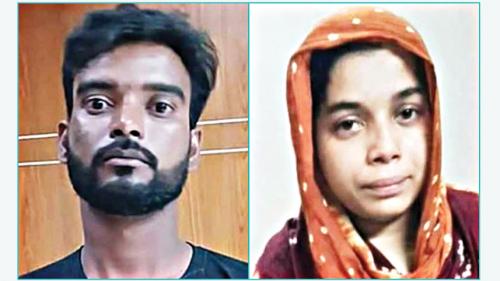
On June 7, 2026, a trial court in Dhaka, Bangladesh, sentenced a couple to death for the rape and subsequent murder of eight-year-old Ramisa Akter. Additionally, the accused couple, Sohel Rana and his wife Swapna Khatun, were fined Taka 5 lakh (approximately 4,069.57 USD) and Taka 2 lakh (approximately 1,627.83 USD), respectively.
Crowds gathered outside the court to hear the verdict of the case, which has sparked nationwide outrage and has highlighted concerns of violence against women and children. The verdict was delivered just five days after the hearings began, making this the fastest murder trial in the country’s history.
Ramisa, who was a second-grade student at Popular Model High School, was found dismembered in Rana’s home in Dhaka’s Pallabi area on May 19, 2026. The following day, the victim’s father, Abdul Hannan Molla, filed a case with the Pallabi Police Station. The case statement reported that Rana lured Ramisa into his room before he raped her.
Investigators noted that he later murdered her before fleeing. He was later detained that same day in Fatullah, while his wife was detained at their home.
The charge sheet was submitted by a sub-inspector, Ohiduzzaman of the Pallabi Police Station, before the Chief Metropolitan Magistrate’s (CMM) Court in Dhaka.
Rana was charged with rape, murder, and destruction of evidence, while Khatun was charged with destruction of evidence, provision of false information, and assistance in the offence.
That same day, the CMM Court transferred the case to the Children Violence Suppression Tribunal, established under the Women and Children Repression Prevention Act. The tribunal is currently handling over 1,800 cases involving violence against children, sexual abuse, physical abuse, and other crimes.
Just over a week later, on June 1, the tribunal formally presented the charges in the Ramisa Aktar case, with testimony completed the following day.
During closing arguments on June 4, 2026, the prosecution sought the death penalty for the couple, while the state-appointed defense requested life imprisonment for Rana and a lighter sentence for Khatun.
According to the defense, who also accepted the final verdict, Rana had confessed twice.
Under Bangladeshi law, death sentences from trial courts must be reviewed by the High Court before they can be carried out.
Law Minister Md Asaduzzaman has expressed hope that the review and appeal proceedings could be carried out in three months if the relevant Supreme Court branch prioritizes the hearing.
The judge, Masrur Salekin, has noted that this case would be a crucial test of the country’s humanity, conscience, law enforcement, and rule of law.
The Children Violence Suppression Tribunal has also stated that it expects efficient, high-quality investigations and judicial proceedings, such as this one, to serve as an example for future cases involving child abuse and violence.
Ramisa’s father has also expressed hope that every child victim receives swift justice and that “such incidents may never happen again” in the country.