government: federal republic
state of civil and political rights: Partly free
constitution: 12 April 1973; suspended and restored several times. Restored last time on 15 December 2007. Amended last time on April 19, 2010.
legal system: based on English common law with provisions to accommodate Pakistan's status as an Islamic state
legislative system: bicameral Parliament or Majlis-e-Shoora consists of the Senate and the National Assembly
judicial system: Supreme Court (judicial chiefs are appointed by the president); Federal Islamic Court (Shari'a)
religion: Muslim majority; Hindu and Christian minorities
death row: 8261 (Interior Ministry, 18/12/2014)
year of last executions: 0-0-0
death sentences: 231
executions: 7
international treaties on human rights and the death penalty:International Covenant on Civil and Political Rights
Convention on the Rights of the Child
Convention Against Torture and Other Cruel, Inhuman or Degrading Treatment or Punishment
situation:
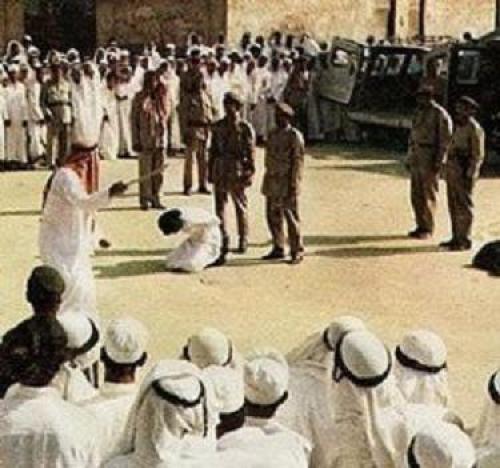
Pakistan sanctions the death penalty for 27 offences, including blasphemy, stripping a woman in public, terrorist acts, sabotage of sensitive institutions, sabotage of railways, attacks on law enforcement personnel, spreading hate against the armed forces, drugs, sedition and cybercrimes.
On 17 December 2014, Pakistan lifted the six-year moratorium on the death penalty in terrorism-related cases, a day after the Taliban-perpetrated massacre at a military-run school in Peshawar in which 150 people, including 134 children, were killed.
On 18 December 2014, the Interior Ministry sent a list of 63 prisoners, who were handed death sentences in terror related cases, to Inspector General Police of all provinces for their execution. Legal wing of the Interior Ministry cleared their names for execution after their mercy petitions had already been rejected by then President Pervez Musharraf.
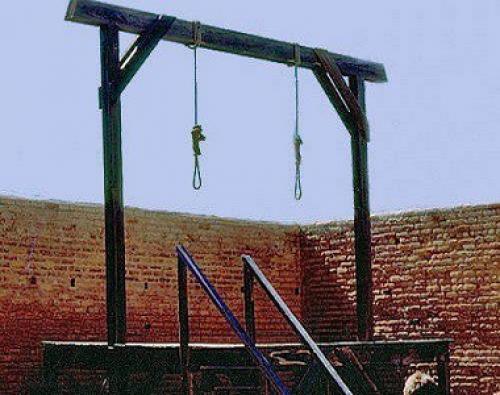
On 19 December 2014, two convicted terrorists were hanged in the city of Faisalabad, Province of Punjab just two days after the Nawaz Sharif government lifted the moratorium on executions in terror cases. A total of 7 executions were carried out in 2014.
Death penalty has been extended also to some Sharia circumstances, such as extramarital relations and blasphemy. The law against blasphemy was introduced under the dictatorship of General Zia ul-Haq in 1985. The law prescribes the death penalty for anyone insulting the prophet Mohammed, other prophets or the sacred scriptures. Under section 295-C of the Penal Code: “Whoever by words, either spoken or written, or by visible representation or by any imputation, innuendo, or insinuation, directly or indirectly, defiles the sacred name of the Holy Prophet Muhammad (peace be upon him), shall be punished with death or imprisonment for life, and shall also be liable to fine.”
Since Zia’s rule, many hundreds of people have been prosecuted under the blasphemy law. No one has been put to death for a blasphemy conviction and most death sentences for blasphemy are overturned on appeal by higher courts. But dozens of people awaiting trial or acquitted of blasphemy charges have been slain by religious fanatics, and lawyers in defending those accused of blasphemy cases have frequently been attacked. Judges have been attacked for dismissing cases and many of the accused face years in jail as their trials drag on. At least 48 people accused of blasphemy have been extra-judicially killed, including seven in prison or outside court, according to Pakistan-based human rights group Life for All.
Not only Christians, but also the nation’s Shiite Muslim minority has been victimised by extremist Sunni Muslim groups for years. Members of the smaller Ahmadi sect, viewed by most Pakistanis as traitors to Islam because they revere another prophet in addition to Muhammad, have been frequent victims of suicide bombings, kidnappings and other attacks.
Besides being used as a tool to bully Christians, Ahmadis or other minorities, the law against blasphemy is often used by some Pakistanis embroiled in property disputes. Usually, evidence in blasphemy cases is scant, apart from the accounts given by the accusers.
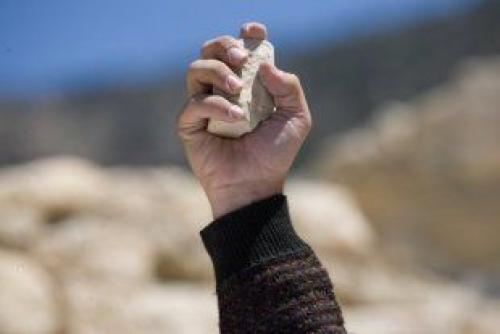
The controversial Islamic Hudud [Koranic punishment] Ordinances - passed in 1979 as part of Zia ul-Haq’s Islamisation programme - deal with adultery and fornication (Zina) offences, crimes related to theft, alcohol and drug consumption, and false accusations in court (Qazf). One of the most controversial provisions states that a woman must have four male witnesses to prove rape or face a charge of adultery herself. Men and women found guilty of adultery face stoning or 100 lashes.
On December 1, 2006, Pakistan President Pervez Musharraf signed into law a bill amending the country's Islamic rape legislation. The bill places rape laws under Pakistan's British-influenced penal code and scraps the harsh conditions placed on rape victims. The amended law would drop the death penalty for people found to have had sex outside of marriage, though they still would be subject to a five-year prison term or $165 fine.
Judges also will be able to choose whether to try a rape case in a criminal court or Islamic court.
Despite the 2006 law, in remote areas of the Country where tribal and feudal systems still dominate, the tribal jury (jirga) continues to operate as the people’s recourse to the law – instead of the police – for resolving inter-tribal disputes and questions of “honour.” Under tribal codes, women are seen as men's property and an allegation of unfaithfulness is punished by death. A woman suspected of having extramarital relations is declared a kari (sinful) and tribal honour requires a family member to kill her.
By the Criminal Laws Amendment Act of 2006, honor killings are to be treated as aggravated killings but in practice, honor killings may be treated more leniently than murder. The government-appointed National Commission on the Status of Women said the law was a weak one as it did not cover the crime fully, but nevertheless a step in the right direction. The law was changed after a prolonged protest by women's and human rights groups. According to the non-governmental Human Rights Commission of Pakistan (HRCP), hundreds of women are killed every year in Pakistan in the name of ‘honour.’
Le leggi hudud si applicano a tutte le Regioni e hanno il sopravvento anche sulla legislazione riguardante i minorenni.
On 1 July 2000, the military Government promulgated the Juvenile Justice System Ordinance 2000 (JJSO) abolishing the death penalty for children under 18 years of age. The law also barred juveniles from being tried as adults and accorded them legal assistance at the expense of the State. However, the provisions in the JJSO are “in addition to and not in derogation of, any other law for the time in force and children are liable to the death penalty under other laws.”
The procedure in most cases is that if a lawyer pleads this point, then the court directs that the suspect’s age be determined medically. And if it is proved that the suspect is not an adult, then the case proceeds according to the procedures laid down in the JJSO.
In December 2001, President Pervez Musharraf issued a new decree commuting all juvenile death sentences to life terms. These steps did not do away with the juvenile death penalty completely however. Other minors are still not being given legal assistance despite the obligation posed by the JJSO. Moreover, the Ordinance was immediately applicable to the whole of Pakistan except Provincially-Administered Tribal Areas (PATA).
The last execution of a juvenile offender took place on 13 June 2006, when Mutabar Khan was executed at the Central Prison of Peshawar after his conviction for murder in 1998. Mutabar was 16 years old at the time of his arrest in 1996.
Under the Narcotics Substances Act 1997, the minimum penalty for anyone found in possession of more than 10 kilograms of illicit drugs is a life sentence, while a death sentence is the maximum penalty.
Most death sentences since 1997 have been handed down by special anti-terrorist courts set up by then prime minister Nawaz Sharif's government to combat growing terrorist attacks in the country. The jurisdiction of these courts gradually evolved to cover political charges and cases involving gang rape and violence against children. These courts hold trials within seven days. Convicted persons have to appeal within seven days, and the appeal must also be heard and decided within a week. These provisions contravene Article 14(3)(b) of the International Covenant on Civil and Political Rights, which entitles any person charged with a criminal offence to have adequate time and facilities for the preparation of his defence. Murder carries the religiously stipulated retributive penalty, where the punishment corresponds in kind and degree to the crime, unless the victim’s family waives the penalty, usually for a payment of diya. In practice, hanging rather than harm in kind is the punishment for murder.
Prisoners in Pakistan, especially those on death row, live in cramped, overcrowded cells and often face abuse. In Punjab convicts are on death row in 30 jails with a total of 812 death row cells that are usually small rooms that measure 9x12 feet, have attached toilets and are cordoned off by walls that are approximately three feet high. On occasions, as many as 12 inmates have to crowd into one cell, charge rights groups. A survey by the Law and Justice Commission of Pakistan, an advisory body to the government, says three to six prisoners are usually kept in a single death cell.
In April 2009, the Lahore High Court abolished the death sentence for women and children under trial for narcotics charges. In June 2009, the Supreme Court of Pakistan advised Courts to observe extreme care when choosing to award the death penalty.
The last execution in Pakistan before the lifting of the moratorium took place on 15 November 2012, when a soldier, Muhammad Hussain, was hanged at a jail in Mianwali city, Punjab Province, for murdering his senior officer Havaldar Khadim Hussain. His hanging ended a de facto moratorium on executions that had been observed since December 2008, when another soldier, Shahid Abbas, was executed for murder. In 2008, Pakistan executed at least 36 people, a significant decrease from 2007, when 134 convicts were executed. Since then, every three months the President’s Office had issued a letter which had put a stay on all capital punishment – a routine that had been in operation for the last few years.
According to the Human Rights Commission of Pakistan, 231 people were sentenced to death in 2014.
Pakistan has one of the largest populations of condemned prisoners and inmates on death row in the world. As of 17 December 2014, there were around 8,261 prisoners on death row in more than five dozen jails of the country, ministries of interior and law and justice and human rights officials said.
On 30 October 2012, Pakistan was reviewed under the Universal Periodic Review of the UN Human Rights Council. On 14 March 2013, in its response to the recommendations received, Zamir Akram, Permanent Representative of Pakistan to the United Nations Office at Geneva, said that there was no national consensus on the repeal of blasphemy laws and the repeal of the death penalty was a matter for Parliament.
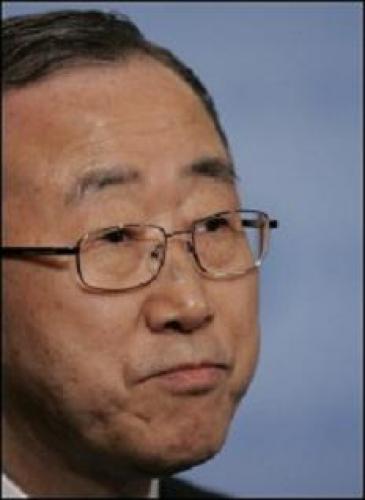
On 25 December 2014, UN Secretary-General Ban Ki-moon urged Pakistan to end capital punishment and restore a moratorium on executions. Ban spoke with Pakistani Prime Minister Nawaz Sharif to express his condolences after the slaughter. However, “while fully recognizing the difficult circumstances, the secretary general urged the government of Pakistan to stop the executions of convicts and re-impose the moratorium on the death penalty,” Ban’s office said in a statement.
On 18 December 2014, Pakistan voted against the Resolution on a Moratorium on the Use of the Death Penalty at the UN General Assembly.