
23 February 2026 :
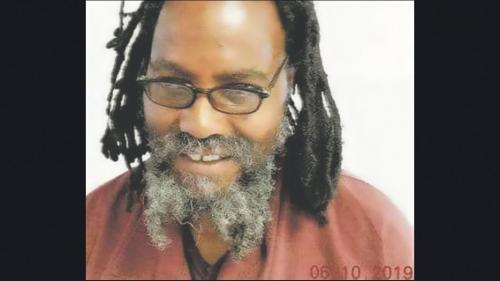
February 16, 2026 - Pennsylvania. An intervention by Mumia Abu Jamal from prison.
The case of Mumia Abu Jamal, now 72 years, Black, is a famous court case that has also been followed in the past by the international media for its political and racial implications.
A militant of the Black Panthers, a revolutionary group that claimed “black power,” Abu-Jamal had been sentenced to death in 1982 on charges of killing a white policeman. On the night of Dec. 19, 1981, according to the police reconstruction, a patrolman, Daniel Faulkner, 25, in Philadelphia stopped a car driven by William Cook, younger brother of Wesley Cook (who later changed his name to Abu-Jamal). According to witnesses, Abu-Jamal, who at the time was working “off the books” as a taxi driver, intervened. A shootout ensued, resulting in Abu-Jamal's injury and Faulkner's death. Near Abu-Jamal, hidden under a car, a gun registered in his name was found, a gun that ballistics experts later claimed was the one he had fired.
During the 1982 trial, the defendant's defense strategy had been that he had been “framed” by racist and vindictive police. After his conviction, Mumia began to argue that not only the police, but also the people's jury and the court had had a very strong racial bias against him. A long series of appeals based on this approach culminated, in 2001, in the confirmation of the guilty verdict but the reversal of the death sentence. After further appeals by both the defense and the prosecution, Cook/Abu-Jamal's sentence was “reduced” to life without parole, which the man is serving at Mahanoy State Penitentiary in Pennsylvania.
Below is the text of the statement from “Prison Radio,” preceded by a brief journalistic introduction. Mumia Abu-Jamal sent a text to the United Nations, accepting the invitation to submit “contributions on the death penalty in relation to the prohibition of torture and other forms of ill-treatment and the protection of human dignity.”
Prison Radio released this statement on Feb. 16, 2026, by Mumia Abu-Jamal, with an introduction by Noelle Hanrahan and Jackie Hortaut.
In response to the United Nations Special Rapporteur’s call for contributions “on the death penalty in relation to the prohibition of torture and other forms of ill-treatment and the protection of human dignity,” we wish to bring to his attention the situation of Mr. Mumia Abu-Jamal, who has spent 29 years of his life on death row in Pennsylvania (USA).
An African American journalist, now aged 71, he had his sentence commuted to life imprisonment without the possibility of parole.
Incarcerated for 45 years, below you will find his testimony on the conditions of survival in prison hell and the physical and mental consequences of his fellow inmates awaiting execution or the deterioration of their health exposing them to death in the case of life sentences.
An iconic figure in the international fight for the universal abolition of the death penalty, Mr. Abu-Jamal was convicted after a racist and expedited trial without being able to defend his innocence. Denounced by Amnesty International, the European Parliament, and the U.N. Human Rights Committee, he has still not obtained a review of his trial. Today, the deterioration of his health, like that of the oldest prisoners, would justify his release on humanitarian grounds.
Submission by Mumia Abu-Jamal to the United Nations
When we think about death row, I must remind you all who hear these words or read these words it is not a movie. Don’t think of a movie. Instead imagine a reality where for years, for many years, people are locked down in their cells for 23 hours a day. Which began as 24 hours a day on the weekends and after years and years, became 22 hours a day.
Also imagine that for what may be the rest of your life you could not hug, nor kiss, nor caress your children, your wife, your brothers, your sisters, your parents because non-contact was the rule.
What did that mean in the real world? And why was it established? What it means is the state separating you from all people that you love and who love you. And what does it mean? It meant that this physical isolation, this true solitary confinement, separated you from the people who naturally care about you. And separated them from you. What is the purpose of that? The purpose is simple: to dehumanize the accused, the death row person and to separate them from humanity itself.
In some states, mostly the South, it has become custom that when a death-row prisoner is escorted throughout the prison, the guards usually shout: “Dead man walking. Get out of the way. Dead man walking.” Now that will remind you of a movie, but that only reminds you of a movie because it happened in real life.
To separate people from other people, it is to deprive people of what it means to be human. To be social. And this is something that has become “expertise” in American prisons, North, South, East or West. This tradition continues in much of this country and is designed to make people lose hope, so that they can be more easily executed, or as the state says “put to death.”
This too is not just a word or description or even a movie. I’ve known men who spent time on death row with me who committed suicide, for a variety of reasons.
Sometimes, they were suffering health issues and could not bear to continue to suffer those health issues. Sometimes they were depressed because they knew that they should have gotten a new trial, but instead they got a resentencing hearing. I knew a guy who I had played handball with, up SCI [Pennsylvania State Correctional Institution] Greene, he was an excellent young handball player, because he’d played it in the world. And we gave each other a good challenge, the old man and the young guy, and he was in excellent health.
Until his appeal got denied and he was given a life sentence instead of the new trial that he knew, he knew, he deserved and by law should have gotten. Within a week he tied himself to some bars in his cell and killed himself. For him, a life sentence, what people call “slow death row,” was too much like death row itself; for him to leave death row, it was another kind of death row. A death row on life row.
I have met people who I have known on death row who were executed by the government of the Commonwealth of Pennsylvania. One guy was about two or three cells away from me when we were at Graterford in Eastern Pennsylvania. He was an older guy; I sent him a note and said, “Listen man, fight your stuff.” And he called down and said “ Jamal, I am tired; I got nothing here, I got nothing to live for, I’m ready to go.” And so he did. He volunteered to be executed. And the State of Pennsylvania took him up on his invitation.
When people are given no way out, given no hope, does it surprise you that men in such conditions committed suicide?
If you think about it, this guy commits suicide by the state. The other Puerto Rican brother I talked about committed suicide because of his deep disappointment that the state could not treat him according to the law as written in their books.
But what was killed was hope. And that is what it was designed to do. That is what death row is designed to be. And that is what death row and slow death row really is. Not just in this state but in several states in a country called “the land of the Free.”
I wanted to give you an inside impression. I hope I have been successful.
Love not Phear,
Mumia ABU-JAMAL
(On the complex court case of Mumia Abu-Jama see HoC 19/07/2001, 13/09/2001, 21/11/2001, 04/12/2001, 18/12/2001, 20/12/2001, 21/12/2001, 08/12/2005, 27/03/2008, 06/10/2008, 06/04/2009, 19/01/2010, 26/04/2011, 11/10/2011, 07/12/2011, 15/01/2012, 09/07/2013)
https://www.workers.org/2026/02/91020/