
01 June 2026 :
UN Women has warned that a recently issued Taliban decree could further undermine the rights and safety of women and girls in Afghanistan, raising concerns that it may normalize child marriage and make it more difficult for women to leave unwanted marriages.
In a statement, Susan Ferguson, UN Women’s special representative in Afghanistan, said Decree No. 18, published by the Taliban’s Ministry of Justice on May 14, represents “another serious development” in the erosion of women’s rights nearly five years after the Taliban returned to power.
The decree outlines rules governing separation between spouses but does not establish a minimum age for marriage, according to UN Women.
“By implying that child marriage is permitted, it risks normalizing the practice,” Ferguson said.
The agency said the decree marks a departure from laws that were in force before the Taliban takeover in August 2021, when Afghanistan’s law established a minimum age for marriage and criminalized forced and child marriage.
According to UN Women, the new regulation instead describes procedures through which a marriage involving a child could be annulled after the individual reaches puberty, prompting concerns among rights advocates that the decree effectively accepts the legality of child marriage.
The agency also said the decree creates additional legal obstacles for women seeking separation from their husbands.
Under the new rules, women must meet stricter evidentiary requirements than men, including providing multiple witnesses to support their claims. In some cases, a husband’s statement or refusal to consent can override a woman’s request for separation, according to the statement.
UN Women said the regulation reinforces what it described as a widening legal disparity between men and women in Afghanistan.
“This again highlights that men and women are no longer equal before the law in Afghanistan,” Ferguson said, referring to another Taliban decree issued earlier this year that also drew criticism from rights groups.
The agency called on Taliban to ensure that laws and policies comply with Afghanistan’s international human rights obligations and protect women from violence, discrimination and coercion.
The statement adds to a growing chorus of international criticism of Decree No. 18.
Last week, the United Nations Assistance Mission in Afghanistan (UNAMA) expressed “grave concern” over the regulation and urged Taliban to uphold Afghanistan’s international human rights commitments. Richard Lindsay, the UK’s special envoy for Afghanistan, later echoed those concerns, calling the decree “another oppressive measure” and urging the Taliban to rescind it.
This comes amid broader international scrutiny of the Taliban’s treatment of women and girls.
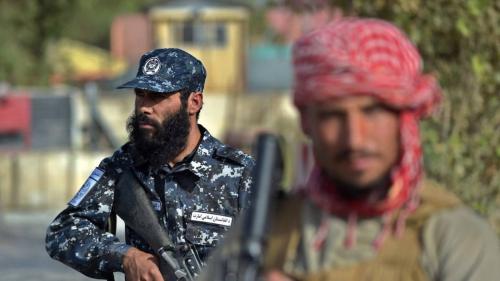
Since returning to power in 2021, the Taliban have barred girls from attending secondary schools and universities, restricted women from many forms of employment, curtailed their participation in public life and imposed wide-ranging limitations on movement and personal freedoms.
The UN has described the cumulative impact of those policies as one of the most severe women’s rights crises in the world, while several UN experts and human rights organizations have argued that the restrictions amount to systematic gender discrimination.
The Taliban have defended their policies as consistent with their interpretation of Islamic law and Afghan cultural values. However, restrictions on women and girls remain one of the principal obstacles to broader international recognition and engagement with the Taliban administration.
UN Women said Afghan women and girls are entitled to live free from violence and discrimination and should have equal access to justice, dignity, safety and participation in society.
“Legal frameworks must uphold equality before the law,” Ferguson said, “and ensure meaningful access to justice without discrimination.