11 February 2026 :
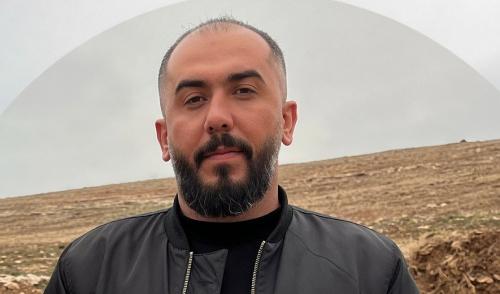
February 10, 2026 - IRAN. Victim Accounts: The Case of Mohammad Jamshidi's Unregistered Body
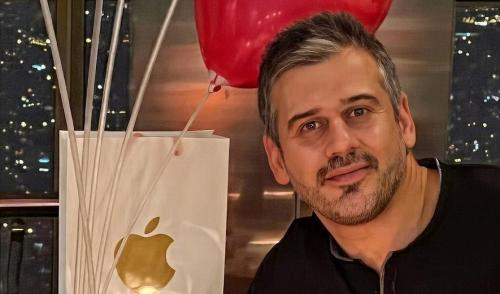
Mohammad Jamshidi was killed on January 8, 2026, after being shot with live ammunition by Islamic Republic security forces in western Tehran. In connection with his killing, the disappearance of his body, and the security pressure exerted on his family, IHR (IHRNGO) obtained detailed information from a source close to the Jamshidi family.
Mohammad Jamshidi, born on 10 May 1983, held a bachelor’s degree and worked as a boxing coach.
A relative of Mohammad Jamshidi told IHRNGO about his participation in the protests on 8 January in the Sadeghieh area of western Tehran: “That night, Mohammad informed his family that he was going out to support people and to prevent teenagers and younger protesters from being harmed. His last contact was with his wife.”
According to the source, shortly before midnight, Mohammad’s wife repeatedly called his mobile phone, but the calls were answered by an unidentified person who said that Mohammad had been injured by several gunshots and was being transferred to Rasoul Akram Hospital.
The source added: “The family were told that Mohammad was first shot in the right knee from the front, and then shot from behind. The second bullet struck his right lung, causing severe damage and heavy internal bleeding. Mohammad was shot near Second Sadeghieh Square, close to the intersection of Ashrafi Esfahani Street and Jalal Al-e Ahmad Highway in western Tehran.”
According to Mohammad Jamshidi’s burial permit, the cause of death was recorded as “injuries caused by high-velocity projectile objects”.
“That same night,” the source described, “the family went to Rasoul Akram Hospital, but they were told that his name was not listed among the injured. By showing photographs and pointing to a tattoo on Mohammad’s arm, the family asked a morgue staff member to check. They were told that around 150 unidentified bodies were being held in the morgue.”
According to the source, after approximately half an hour, the family were informed that Mohammad was among those killed and that his body was in the morgue. “However, when the family returned the following morning, the morgue official said that only five bodies remained and that Mohammad’s body was no longer there.”
The source added: “The family were first referred to Kahrizak (the Legal Medicine Organisation in south Tehran), but Mohammad’s body was not found there either. Eventually, after two days with no information, his body was identified on Saturday at Behesht-e Zahra cemetery.”
Based on information received, Mohammad Jamshidi’s body had initially been registered as an “unidentified man” due to the absence of identification documents.
The source said that security forces imposed restrictions during the handover of the body: “The family were told that burial in Tehran would not be permitted unless it took place in a designated section, without a gravestone and without any ceremony. Ultimately, the family were forced to transfer Mohammad’s body to a village outside Tehran and bury him without holding a public funeral.”
According to the source, the family were required to sign a written undertaking that the burial would take place without slogans or publicity, and permission to hold a ceremony in a hall was denied. “The ceremony was only permitted under restrictions and inside a mosque. Four days passed between the killing of Mohammad Jamshidi and his burial.”
https://iranhr.net/en/articles/8604/