
05 January 2026 :
January 5, 2026 - IRAN. Report on the 9th Day of Protests
More Than 1,200 Protesters Arrested, 29 killed
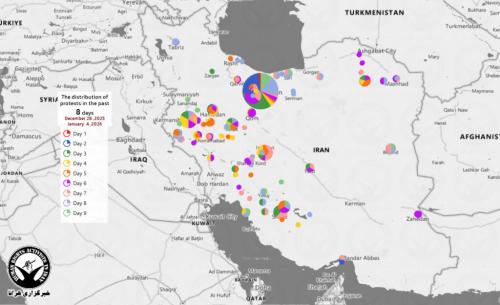
For the ninth consecutive day, protests and strikes continued across numerous cities in Iran. Analysis of collected and verified data shows that despite an increasingly securitized environment, the expanded presence of law enforcement and security forces, ongoing street-level confrontations, and the use of live ammunition in some areas, the geographic scope of the protests has not diminished. On the contrary, diverse forms of protest activity have persisted nationwide. In recent days, at least 257 locations in 88 cities across 27 provinces have witnessed protest gatherings. During this period, at least 1,203 citizens were arrested, and at least 29 protesters lost their lives.
Protests that initially took shape in the form of strikes and labor-related gatherings entered a new phase on the ninth consecutive day. Alongside the continuation of some labor actions, street protests and student demonstrations at several universities have also been reported.
Background to the Protests
The protests emerged in a context where economic pressures on broad segments of society have reached a critical stage, and clear signs of disruption in the cycle of daily livelihoods are visible. Repeated surges in exchange rates, prolonged market instability, and the continuous decline in purchasing power have darkened and rendered unpredictable the economic outlook for households and trade activists alike, turning financial insecurity into a widespread experience.
In the days leading up to the start of the protests, reports indicated that exchange rates had crossed new thresholds, alongside a downturn in the capital market and capital outflows. Analysts have interpreted this trend as a shift of liquidity toward safer markets such as gold and foreign currency, and a decline in public trust in economic policies. At the grassroots level, the consequences have included the closure or partial shutdown of trade units, increasing difficulty in sustaining small businesses, and the spread of protest and strike waves in various cities, protests rooted not in a single short-term factor, but in the long-term accumulation of livelihood pressures and the erosion of hope for improved conditions.
Geography of the Protests
Based on updated and aggregated information, at least 257 locations across Iran have witnessed protests, street gatherings, or labor strikes in recent days. These protest activities have been reported in 27 provinces nationwide, and during the same period, 17 universities have also seen student-led protest actions.
Over the past 24 hours, reports have been received of protest gatherings in the cities of Ilam, Arak, Hamedan, Amol, Lahijan, Malekshahi, Semnan, Shalamzar, Bojnord, Babol, Koushk, Yasuj, Parand, Tehran, Asgharabad, Bandar Ganaveh, Marvdasht, Najafabad, Abadeh, Eslamabad-e Gharb, Sanandaj, Sari, Farsan, Shandiz, Sonqor, and Birjand.
An examination of the geographic pattern of the protests indicates that these activities have not been limited to major metropolitan areas, but have also extended to smaller cities and various regions across the country. This reflects the increasingly widespread nature of the protests and the participation of diverse social groups in the protest movement.
Methods of Protest and Slogans
Verified reports indicate that the protests on the ninth day, similar to previous days, encompassed a diverse range of demands. Slogans voiced during gatherings went beyond livelihood and economic grievances, also including criticism of governance, objections to restrictions on individual and social freedoms, and calls for justice.
Within the framework of its human rights mission, HRANA focuses its reporting on slogans and demands that are directly related to violations of human rights or the pursuit of fundamental freedoms and civil rights. The persistence of these demands across different parts of the country reflects the depth of public discontent and the overlap of economic, social, and political grievances within the ongoing protests.
Conduct of Law Enforcement–Security Forces and Details of Violence
On the ninth day of nationwide protests, reports and videos received by HRANA continue to indicate the persistence of a heavy security atmosphere and the use of repressive measures by law enforcement and security forces to prevent the formation or expansion of protest gatherings. Reports from various cities document violent crackdown, gunfire, the use of tear gas, and the arrest of protesters.
On the ninth day of protests, at least four videos of forced confessions by detained citizens in Tehran, Malard, Parand, and Darreh Shahr were published by official media outlets. It remains unclear under what conditions these videos were recorded, and there are serious ambiguities regarding how these confessions were obtained. Similar videos of forced confessions by protesters had also been broadcast in previous days by security institutions or media outlets close to them.
Alongside these developments, official narratives presented by local authorities regarding some of the fatalities have been met with skepticism from eyewitnesses and unofficial reports. Details surrounding the circumstances of these deaths remain under review and subject to verification.
Fatalities and Injuries
According to HRANA’s updated information, the deaths of at least 29 people during the nine days of protests have been confirmed. Of these, two were affiliated with law enforcement–security forces. Additionally, 64 cases of injuries among protesting citizens have been recorded to date, most of which resulted from pellet and rubber bullets.
Fars News Agency, a media outlet close to security institutions, claimed in a report that from the beginning of the protests up to last night, approximately 250 police officers and 45 Basij members were injured. Based on these figures, the number of injured military and law enforcement personnel reaches 314 as of the time of this report.
According to information confirmed by HRANA, during the past 24 hours, the deaths of Reza Moradi Abdolvand in Azna; Sajad Babaei in Qorveh; Mohammad Qasem Rousta in Marvdasht; Mansour Mokhtari in Marvdasht; Erfan Bozorgi in Marvdasht; Vahab Ghaedi in Azna; and Mostafa Fallahi in Azna have been confirmed in connection with protests in these cities.
The newspaper Emtedad, citing an informed source, confirmed that as a result of violence by law enforcement–security forces in Malekshahi and the use of live ammunition, at least 12 people were injured and three others lost their lives.
Internet Disruption
During the recent protests, the policy of imposing internet restrictions has not relied on a complete network shutdown, but rather on the implementation of gradual, localized, and calculated disruptions. Under this approach, basic connectivity has been maintained, while the quality and stability of the connection have been weakened to the extent that practical use of the internet for communication, messaging, and coordination has faced serious difficulties. This method reflects an approach that, instead of overt disconnection, relies on eroding network functionality and undermining users’ trust in internet access.
Field observations from Tehran and other cities show that these restrictions have not been applied uniformly; their intensity and form have varied depending on location, time, and service provider. In some areas, mobile or fixed-line internet access was cut off for hours, while in others the connection was weak, unstable, and effectively unusable. This apparent dispersion and lack of uniformity indicate the targeted implementation of restrictions in sensitive areas and protest sites, a model that reduces protesters’ communication capabilities without provoking widespread public backlash.
From a technical perspective, many of these disruptions are not clearly visible in aggregate data, as they are applied at local network levels or higher communication layers. At the same time, intensified filtering, widespread blocking of circumvention tools, and interference with commonly used protocols have led to service instability and a noticeable decline in traffic. The result of these combined measures is a network that may appear technically “connected,” but in practice has lost the capacity for stable data transmission and has become an ineffective tool for users.
Arrests
Over nine days of protests, at least 1,203 protesting citizens have been arrested; however, the actual number of detainees is estimated to be significantly higher.
Individually identified arrests on the ninth day:
- Navid Kahro – Arrested in Rasht; place of detention unknown; released. (Source: United Students) - (Note: Student)
- Hessam Ghadiri – Arrested in Rasht; place of detention unknown; detained. (Source: HRANA) - (Note: Student)
- Mohammad Babakhani – Arrested in Eqbaliyeh; place of detention unknown; detained. (Source: HRANA)
- Mehdi Kahani – Arrested in Ilam; place of detention unknown; detained. (Source: Kurdpa) - (Note: 17-year-old minor)
- Reza Chakav – Arrested in Ilam; place of detention unknown; detained. (Source: Kurdpa)
- Milad Shapsandi – Arrested in Ilam; place of detention unknown; detained. (Source: Kurdpa)
- Mehdi Fahimi – Arrested in Ilam; place of detention unknown; detained. (Source: Kurdpa)
- Armin Karimi – Arrested in Ilam; place of detention unknown; detained. (Source: Kurdpa)
- Amir Mohammad Sohrabian – Arrested in Ilam; place of detention unknown; detained. (Source: Kurdpa)
- Mohaddeseh Razzazadeh – Arrested in Ilam; place of detention unknown; detained. (Source: Kurdpa)
- Ali Saraei – Arrested in Ilam; place of detention unknown; detained. (Source: Kurdpa)
- Amir Yousefzadeh – Arrested in Ilam; place of detention unknown; detained. (Source: Kurdpa)
- Mohammad Mehdi Aydian – Arrested in Ilam; place of detention unknown; detained. (Source: Kurdpa)
- Jafar Rahbari – Arrested in Darreh Shahr; place of detention unknown; detained. (Source: Kurdpa)
- Nima Naseri – Arrested in Darreh Shahr; place of detention unknown; detained. (Source: Kurdpa)
- Hassan Nourdinvand – Arrested in Darreh Shahr; place of detention unknown; detained. (Source: Kurdpa)
- Mohammad Amin Bazgir – Arrested in Darreh Shahr; place of detention unknown; detained. (Source: Kurdpa)
- Mehdi Gheysar Beigi – Arrested in Malekshahi; place of detention unknown; detained. (Source: Kurdpa)
- Nabi Omidi – Arrested in Ilam; place of detention unknown; detained. (Source: Kurdpa) – (Note: Associate Professor of Economics at the University of Ilam)
- Iman Cheshteh – Arrested in Mahabad; place of detention unknown; detained. (Source: Kurdpa) - (Note: Student)
- Meysam Nouri – Arrested in Ilam; place of detention unknown; detained. (Source: Kurdpa)
- Moein Fazeli – Arrested in Badreh; place of detention unknown; detained. (Source: Kurdpa)
- Reza Abdshahi – Arrested in Badreh; place of detention unknown; detained. (Source: Kurdpa)
- Arya Karimi – Arrested in Badreh; place of detention unknown; detained. (Source: Kurdpa)
- Behzad Abbasi – Arrested in Chardavol; place of detention unknown; detained. (Source: Kurdpa)
- Hiva Abbasi – Arrested in Chardavol; place of detention unknown; detained. (Source: Kurdpa)
- Mostafa Faraji – Arrested in Malekshahi; place of detention unknown; detained. (Source: Kurdpa)
- Javad Malek – Arrested in Malekshahi; place of detention unknown; detained. (Source: Kurdpa)
- Ali Sajadian – Arrested in Sarableh; place of detention unknown; detained. (Source: Kurdpa)
- Milad Karami – Arrested in Ilam; place of detention unknown; detained. (Source: Kurdpa)
- Amir Morad Haseli – Arrested in Badreh; place of detention unknown; detained. (Source: Kurdpa)
- Alireza Naghizadeh – Arrested in Sarableh; place of detention unknown; detained. (Source: Kurdpa)
- Omid Aini – Arrested in Dehloran; place of detention unknown; detained. (Source: Kurdpa)
- Sahand Nejatbakhsh – Arrested in Tehran; place of detention unknown; released. (Source: United Students) - (Note: Student)
- Amin Karimi – Arrested in Tehran; place of detention unknown; released. Source: Amir Kabir Newsletter - (Note: Student)
- Mobin Safdari – Arrested in Tehran; place of detention unknown; detained. Source: Amir Kabir Newsletter - (Note: Student)
- Ali Bijani Banari – Arrested in Gachsaran; place of detention unknown; detained. (Source: HRANA)
- Alireza Maki Zadeh Banari – Arrested in Gachsaran; place of detention unknown; detained. (Source: HRANA)
- Mohsen Sabzi Zadeh Banari – Arrested in Gachsaran; place of detention unknown; detained. (Source: HRANA)
- Hassan Maili – Arrested in Hamedan; place of detention unknown; detained. (Source: HRANA)
- Sajad Nazemkani – Arrested in Gachsaran; place of detention unknown; detained. (Source: HRANA)
- Ayoub Karimi – Arrested in Malekshahi; place of detention unknown; detained. (Source: HRANA)
- Parviz Yazdani – Arrested in Bojnord; place of detention unknown; detained. (Source: Baloch Activists Campaign)
- Ehsan Masoudi – Arrested in Tehran; place of detention unknown; released. (Source: United Students) - (Note: Student)
- Alireza Rasouli – Arrested in Tehran; place of detention unknown; detained. Source: (Amir Kabir Newsletter) - (Note: Student)
- Ruhollah Karami – Arrested in Dehloran; place of detention unknown; detained. (Source: Kurdpa)
- Mobin Oulad – Arrested in Darreh Shahr; place of detention unknown; detained. (Source: Kurdpa)
- Bijan Maghsoudi – Arrested in Darreh Shahr; place of detention unknown; detained. (Source: Kurdpa)
- Noushad Arabi – Arrested in Sarableh; place of detention unknown; detained. (Source: Kurdpa)
- Amirhossein Seidi Boujani – Arrested in Kermanshah; place of detention unknown; detained. (Source: Kurdpa)
- Amir Lotfi – Arrested in Ilam; place of detention unknown; detained. (Source: Kurdpa)
- Mohammad Alinesab Banari – Arrested in Gachsaran; place of detention unknown; detained. (Source: HRANA)
- Amir Hossein Bahrampour – Arrested in Mashhad; place of detention unknown; detained. (Source: HRANA)
- Erfan Kaskani – Arrested in Sabzevar; held in the quarantine ward of Sabzevar Prison; detained. (Source: HRANA)
- Esmail Salehabadi – Arrested in Joveyn; place of detention unknown; detained. (Source: HRANA)
- Abolfazl Mohammadi – Arrested in Sabzevar; place of detention unknown; detained. (Source: HRANA)
- Ebrahim Derakhshan – Arrested in Yasuj; held at the IRGC Intelligence detention facility; detained. (Source: HRANA)
- Ahmadreza Madani – Arrested in Yasuj; held at the IRGC Intelligence detention facility; detained. (Source: HRANA)
- Ahmad Karami – Arrested in Yasuj; held at the IRGC Intelligence detention facility; detained. (Source: HRANA)
- Arya Sabzpour – Arrested in Yasuj; held at the IRGC Intelligence detention facility; detained. (Source: HRANA)
- Omid Mohammadi – Arrested in Yasuj; held at the IRGC Intelligence detention facility; detained. (Source: HRANA)
- Hassan Emouri – Arrested in Yasuj; held at the IRGC Intelligence detention facility; detained. (Source: HRANA)
- Shahab Gholamian – Arrested in Yasuj; held at the IRGC Intelligence detention facility; detained. (Source: HRANA)
- Ali Hassan Behamin – Arrested in Yasuj; held at the IRGC Intelligence detention facility; detained. (Source: HRANA)
- Alireza Oveisi – Arrested in Yasuj; held at the IRGC Intelligence detention facility; detained. (Source: HRANA)
- Alireza Rostami – Arrested in Yasuj; held at the IRGC Intelligence detention facility; detained. (Source: HRANA)
- Mohammad Amin Rasti-Zadeh – Arrested in Yasuj; held at the IRGC Intelligence detention facility; detained. (Source: HRANA)
- Mohammad Mokhtari – Arrested in Yasuj; held at the IRGC Intelligence detention facility; detained. (Source: HRANA)
- Mehrdad Shabanzadeh – Arrested in Yasuj; held at the IRGC Intelligence detention facility; detained. (Source: HRANA)
- Neda Gerami – Arrested in Yasuj; held at the IRGC Intelligence detention facility; detained. (Source: HRANA)
- Yashar Shahbazi – Arrested in Yasuj; held at the IRGC Intelligence detention facility; detained. (Source: HRANA)
- Abolfazl Azarian – Arrested in Behbahan; place of detention unknown; detained. (Source: HRANA)
- Ahmad Reza Hashemi – Arrested in Behbahan; place of detention unknown; released. (Source: HRANA)
- Siroos Mohammadi Khorasani – Arrested in Behbahan; place of detention unknown; released. (Source: HRANA)
- Mohammad Shafiei – Arrested in Behbahan; held in Behbahan; detained. (Source: HRANA)
- Sadra Yousefi – Arrested in Darreh Shahr; place of detention unknown; detained. (Source: Kurdpa)
- Ali Darabi – Arrested in Darreh Shahr; place of detention unknown; detained. (Source: Kurdpa)
- Keyomars Vaezhi – Arrested in Sonqor; place of detention unknown; detained. (Source: Kurdpa)
Group Arrests or Arrests Without Identity Confirmation on the Ninth Day
(Based on media reports or HRANA field investigations):
- The arrest of at least 100 citizens in Bojnord
- The arrest of 7 citizens in Tehran, Bandar Abbas, Qom, Yasuj, Malard, and Darreh Shahr
- The arrest of five students at the University of Birjand
- The arrest of 14 individuals in Qazvin
- The arrest of a number of citizens under the age of 20 in Yazdanshahr
- The arrest of two individuals in Isfahan
- The arrest of at least four students at Noushirvani University of Technology in Babol
International Reactions
As nationwide protests continued and security crackdowns intensified in Iran, international reactions and statements also increased.
Donald Trump, the President of the United States, once again warned the Iranian government against the use of violence against protesters. He stated, “If they start killing people like they did in the past, in my view they will face a very severe blow from the United States of America.”
Reaction of Iranian Government Officials
Inside the country, government officials continued to emphasize a security-based narrative of the protests. Today, Mohammad Bagher Ghalibaf, the Speaker of Parliament, described protesters as “rioters” and “instigators of unrest,” and claimed they were linked to “intelligence services.”
The head of the judiciary, speaking at a meeting of the Supreme Judicial Council, threatened protesters and stated that those arrested would face decisive action and that there would be “no leniency.” Stressing zero tolerance toward what he described as “riots,” he ordered that individuals who had assisted protesters, even if they had not participated directly in demonstrations, should be prosecuted.
The IRGC’s Lorestan branch also issued a statement announcing the end of what it called a “period of leniency,” declaring that the “agents and organizers of the unrest will be identified decisively and dealt with legally in the shortest possible time.” Meanwhile, the spokesperson for Iran’s Ministry of Foreign Affairs described the U.S. president’s warnings regarding the suppression of protesters in Iran as “psychological warfare” by the United States and Israel.
In the executive sphere, the government announced internet restrictions and shutdowns in certain areas. The Minister of Communications stated that this policy was neither “absolute nor permanent” and was being implemented with security and livelihood considerations in mind. At the same time, Parliament approved the general outline of the 2026 budget bill, promising “livelihood reforms”, a move observers have interpreted as an attempt to contain growing public discontent.
Domestic Reactions (Civil and Public Figures)
The Iranian Writers’ Association issued a statement supporting the people’s “unconditional right to protest,” calling on writers, freedom-seeking artists, and aligned institutions around the world to “be the loud voice of support for the people of Iran and not allow the government to once again fill prisons and cemeteries with protesters.” The statement noted that the Islamic Republic was founded on the “killing, torture, and imprisonment of opponents, critics, and freedom seekers,” emphasizing that the government has consistently responded to street protests with a “uniform pattern,” including “direct gunfire at protesters and the fabrication of cases against detainees.”
The Khorasan Bar Association, reacting to the recent protests, stressed the need to uphold citizens’ rights and human dignity and announced its readiness to play an advisory role in legal dialogue. The statement emphasized that peaceful protest against economic conditions is legitimate and must be distinguished from violent or destructive acts that exploit such protests.
Cinema actor Reza Kianian, in defense of the protesters, wrote on his personal page that it is young people with no future, the unemployed, shopkeepers, and employees whose income does not cover their expenses who are protesting. He stressed that protesters take to the streets out of desperation to make their voices heard.
Homayoun Shajarian, a traditional Iranian music singer, announced the cancellation of his concerts, writing that due to the pain and suffering experienced by the people and the violence faced by protesters, he was unable to perform. Parviz Boroumand, former goalkeeper of Iran’s national football team, addressed officials, stating: “The voice of Iran’s oppressed, dignified, and honorable people must be heard; these people are not rioters.”
Conclusion
The ongoing protests, which began in Tehran’s bazaar, have entered their ninth day marked by geographic expansion, increased public participation, and an intensified presence of security forces. The combination of livelihood-related and political demands, rising arrests, and authorities’ simultaneous economic and security-oriented efforts to contain the crisis reflect the government’s heightened sensitivity to the continuation of these protests.
HRANA continues to collect, verify, and complete information related to these protests and will publish supplementary reports should the gatherings persist or expand further.