
29 January 2026 :
January 28, 2026 - IRAN. Hrana Report on 32nd day of protests: 6,373 confirmed fatalities, 17,091 under review
Limited Internet Access, Ongoing Arrests, and Growing International Pressure
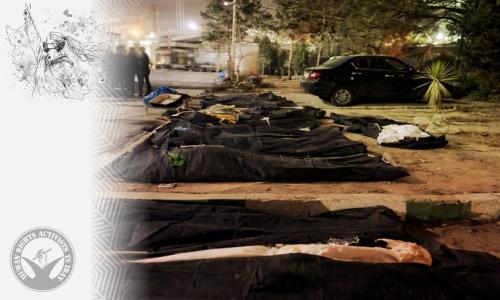
According to HRANA’s latest aggregated data on the 32nd day since the start of the protests, the total number of confirmed fatalities has reached 6,373. Of these, 5,993 were protesters, 113 were minors under the age of 18, 214 were forces affiliated with the government, and 53 were non-protesters/civilians. The number of deaths currently under review has been reported as 17,091.
The total number of arrests has reached 42,486. The number of severely injured individuals stands at 11,018, the number of broadcast forced confessions has been reported as 270 cases, and 11,027 people have been summoned to security institutions. Additionally, a total of 658 protest-related incidents have been recorded across 202 cities in 31 provinces.
Current developments focus on the continuation of communication control policies, including the limited restoration of internet access, the ongoing wave of arrests, and post-crackdown pressures marked by the imposition of heavy bail requirements on detainees, alongside international reactions and emerging positions on designating the Islamic Revolutionary Guard Corps (IRGC) as a terrorist organization.
Continued Communication Restrictions; Limited Internet Restoration
On the 32nd day since the start of the protests, restrictions and security control over communications remain in place. After nearly three weeks of internet shutdown or severe disruption, data and field accounts now suggest that international internet access has been partially restored for some users. However, access patterns have not returned to “normal,” and many users continue to face heavy filtering, intermittent outages, and selective access. This situation has effectively led to the formation of a “tiered access” system, in which certain services are available only to specific groups or through limited pathways, while the majority of users experience persistent restrictions.
The economic and social consequences of these communication disruptions have also been reported. Online business operators have described a significant drop in sales and the paralysis of order processing, payment, and distribution cycles, particularly for businesses that rely primarily on social media platforms, online payment gateways, and direct customer communication. Alongside economic damage, communication shutdowns have also heightened security risks for the injured and their families. Restrictions on contact and access to information have made it more difficult to track the status of detainees, coordinate aid efforts, and even seek medical care, while further expanding an atmosphere of fear of surveillance and arrest.
International Reaction
International reactions to the protests on this day focused on Europe’s political stance toward the Islamic Revolutionary Guard Corps (IRGC) and its role in the crackdown on the protests.
On one side, French officials have explicitly spoken of Paris’s support for placing the IRGC on the European Union’s list of terrorist organizations, while simultaneously emphasizing the use of sanctions tools, including travel bans and asset freezes, against those responsible for the repression. This stance has been accompanied by demands such as a halt to executions, an end to digital restrictions, and the facilitation of international fact-finding mechanisms.
On the other side, the President of the European Parliament has also adopted a clear position, describing the designation of the IRGC as a terrorist organization as a “historic duty” for Europe, framing it within the context of international accountability for the repression and killing of protesters. At the same time, some reports have pointed to claims of a broad consensus among EU member states on this issue. Taken together, these positions indicate that the debate over accountability and international pressure mechanisms remains at the center of attention.
Continued Arrests and Repression: Lack of Information on Detainees and Heavy Bail Requirements
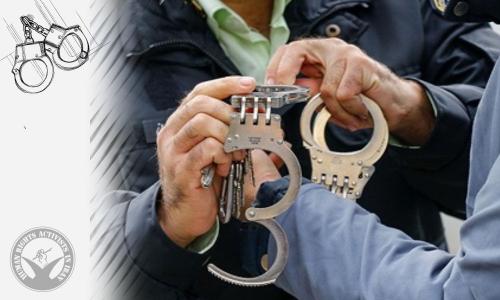
Despite the end of the street phase of the protests, data from Day 32 indicate that the cycle of arrests and case-building continues, often accompanied by lack of information about detainees’ whereabouts, transfers to security detention facilities, and pressure on families. Aggregated reports from multiple cities point to group arrests of citizens, ranging from multi-defendant cases in Tehran, Qaen, and Mashhad to larger lists of detainees in various other cities. Alongside these accounts, official and semi-official reports have also referred to the arrest of dozens of individuals in several provinces and cities in connection with the nationwide protests. The practical outcome of this trend is the maintenance of a repressive, police-state atmosphere: arrests continue to be used as a tool of social control and to prevent the resurgence of protests, even after public gatherings have subsided.
Some individuals are also targeted for repression due to the performance of their professional and occupational duties. As an exmaple, reports have emerged of the arrest of a physician in Isfahan on charges related to assisting injured protesters. At the same time, narratives have surfaced regarding the risks faced by injured individuals when seeking hospital care, a situation that can disrupt treatment processes and extend fear of prosecution into the healthcare sphere. There have also been reports of arrests and summonses within the cultural community (including filmmakers), as well as increased security pressure inside prisons, indicating efforts to silence prominent social figures and suppress voices expressing solidarity and alignment with the protests.
Alongside arrests, heavy bail requirements have become one of the main pressure points on detainees’ families. Reports indicate a sharp increase in bail amounts, in some cases reaching unusually high levels by nonstandard criteria. Families face not only severe financial strain but also bureaucratic obstacles and exhausting procedures to post bail. This policy effectively serves two simultaneous functions: on the one hand, it renders temporary release impossible for many detainees; on the other, it draws families into a cycle of economic and psychological distress. Under such conditions, even when bail is formally granted, the practical possibility of release is not necessarily ensured, as posting bail, converting deeds, or having guarantees accepted is often met with multiple layers of restriction and delay.
Statistics
- Number of recorded gatherings/protests: 658
- Number of cities involved (no duplicates): 202
- Number of provinces involved (no duplicates): 31
- Total arrests: 42,486
- Arrests of individuals under 18: 326
- Arrested students: 70
- Broadcast forced confessions: 270 cases
- Summonses to security institutions: 11,027 cases
- Severely injured individuals: 11,018
- Confirmed fatalities: 6,373
- Protesters: 5,993
- Minors (under 18): 113
- Government-affiliated forces: 214
- Non-protesters/civilians: 53
- Fatalities under review: 17,091
Summary
The 32nd day since the start of the protests concluded with widespread communication controls still in place, despite a limited restoration of internet access, and with their economic and social impacts continuing. At the same time, arrests and security pressures have entered a post-crackdown phase, while heavy bail requirements have become an effective tool for wearing down families and restricting the possibility of temporary release for detainees.On the international front, new positions adopted by Europe and France regarding the designation of the Islamic Revolutionary Guard Corps (IRGC) as a terrorist organization and the need for accountability indicate that the issue of repression and demands for international responsibility remain active, and increasingly intensified, at the diplomatic and media levels.