
20 January 2026 :
January 19, 2026 - IRAN. Hrana Report on 23rd day of protests: 4,029 confirmed fatalities, 9,049 fatalities under review
Internet Blackout, Media Clampdown, and Cancellation of Davos Invitation
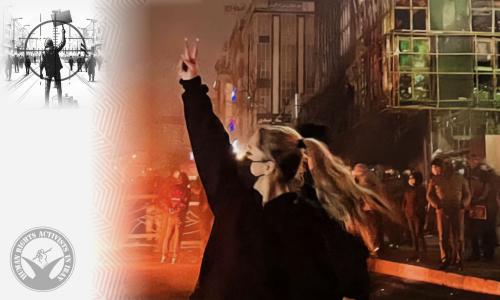
On the twenty-third day of nationwide protests, according to HRANA’s aggregated data, the number of confirmed fatalities has reached 4,029, while the number of fatalities under review stands at 9,049. Additionally, at least 5,811 people have sustained severe injuries during the protests, and the total number of arrests has risen to 26,015. Alongside the continued heavy security presence in various cities, reports today also pointed to widespread arrests as well as media and intelligence-related measures, including the suspension of Ham-Mihan newspaper and the ongoing restriction of communications.
As Iran nears the thirteenth day of the internet shutdown, prospects for access to foreign platforms remain uncertain, even in the event of a partial restoration of connectivity. The head of the Digital Transformation Commission of the Iran Computer Guild Organization stated that “given the current conditions, there is currently no space for reconnecting foreign platforms.”
Disruption of Communications
The widespread internet blackout and communications disruption in Iran, which according to reports has now entered its thirteenth day, continues to serve as a central tool for controlling public space and restricting the flow of information amid the protests. Indicators of Iran’s connectivity to the global internet have been reported at extremely low levels in recent days. At the same time, there have been reports of brief and intermittent connections which, rather than signaling a sustainable restoration of internet access, suggest a shift in tactics in the enforcement of restrictions.
In this context, NetBlocks has reported the continuation of the nationwide shutdown, while also noting signs that may indicate the testing of a domestic network (intranet) with even stricter filtering. If consolidated, such a scenario would further limit free access to the global internet and make independent information dissemination more difficult. These types of “limited re-openings” may be designed to maintain a minimal level of administrative and banking functions or to manage economic pressures, without restoring broad public access to communication tools and widely used platforms.
At the same time, government officials have attempted to present the timeline for the “return of the internet” as imminent. Hossein Afshin, the Vice President for Science and Technology, announced that the internet would return to normal “by order of the president” within the next two days or, at the latest, by the end of the week. He also stated that if the shutdown continues, “fixed IPs” would be provided for large companies, a solution critics consider inadequate, as without public access for citizens, service cycles and the digital economy would remain disrupted.
However, other statements indicate that even in case of “restored connectivity,” reopening foreign platforms and returning to previous conditions is far from certain. The head of the Digital Transformation Commission of the Iran Computer Guild Organization stated that, given current circumstances, the issue of lifting filtering has been postponed and that “at present, reconnecting foreign platforms is not possible.” This stance highlights the gap between “internet connectivity” and “meaningful access,” suggesting that communications policy may move toward a restricted, selective internet based on heightened control.
The consequences of the internet blackout have extended far beyond communications, affecting a wide range of daily activities, businesses, access to medical and emergency services, and even the flow of information regarding arrests and the condition of the injured. The disruption of communications, particularly amid intensified repression, increases the risk of enforced disappearances, pressure on families, and difficulties in independently verifying events. The disruption of communications, particularly amid intensified repression, increases the risk of enforced disappearances, pressure on families, and difficulties in independently verifying events, and effectively leads to the imposition of a state of deliberate ambiguity over the public sphere.
In line with this information-control policy, Ham-Mihan newspaper was also suspended today by the Press Supervisory Board. The editor-in-chief of the newspaper stated that the suspension was due to the publication of two articles, one of which addressed the issue of the “violation of medical neutrality during the protests” under the headline “The Hospital Story from Ilam to Sina.” The suspension of this newspaper, alongside internet restrictions, can be assessed as a simultaneous escalation of pressure on domestic media and tighter control over the public narrative.
Heightened Security Atmosphere
Today, a security atmosphere continued to prevail in many cities across Iran. These included the visible presence of law enforcement and security forces in streets and high-traffic areas, as well as increased field controls and heightened sensitivity toward even small gatherings. Reports from some areas point to the widespread deployment of forces, checkpoints, motorcycle patrols, and an increased level of “citizen monitoring.” In this context, the presence of security forces is not limited solely to managing gatherings but contributes to the creation of a deterrent and fear-inducing atmosphere across cities, particularly as night falls.
Alongside this situation, reports of arrests in various cities were also published today. According to HRANA, following the nationwide protests, six citizens were arrested in Rafsanjan, one citizen in Sirjan, and “several individuals” in cities across Semnan Province. Additionally, in Marivan, Pishva Salehi was arrested by security forces and transferred to an undisclosed location. In Malard, the arrest of another citizen was reported, and at the same time a video of their forced confessions was released, although the circumstances under which it was recorded remain unclear. Taken together, these cases indicate that arrests continue to be one of the main tools for on-the-ground suppression of protests and the creation of public fear.
At the same time, the announcement of mass arrests in Razavi Khorasan highlights the government’s security and intelligence measures. The province’s General Directorate of Intelligence reported the arrest of 192 citizens in connection with the protests. The publication of such official or semi-official figures, in addition to serving operational purposes, may also function as a form of threatening messaging aimed at social deterrence.
International Reactions
At the international level, one of the most significant developments today was the cancellation of Abbas Araghchi’s invitation to attend the World Economic Forum (Davos), a move that drew widespread attention. According to published reports, Araghchi was scheduled to participate on Tuesday, January 20, in a session titled “Shaping Cooperation in a Fragmenting World” in a lecture and Q&A format. However, the World Economic Forum announced that his invitation had been withdrawn.
At the regional level as well, it has been reported that developments in Iran were discussed during diplomatic contacts, with some governments emphasizing the need to monitor trends and pursue regional coordination. Taken together, these developments indicate that Iran’s recent protests and the authorities’ violent crackdown are simultaneously exerting a significant impact across the realms of political pressure, media attention, and the diplomatic sphere.
Government Reactions
In response to external pressure and reactions, as well as the continuation of protests, officials of the Islamic Republic once again emphasized a security and judicial measures in confronting the situation.
One of the most significant official positions today was a joint statement issued by the heads of the three branches of government. In this statement, Masoud Pezeshkian, Mohammad Bagher Ghalibaf, and Gholamhossein Mohseni Ejei called for “leniency and compassion toward those who were deceived,” while simultaneously stressing the need for “decisive punishment of terrorist instigators.” This dual framing, distinguishing between the “deceived” and the “instigator-terrorist”, has in recent days become a recurring element of official rhetoric and provides justification for harsher judicial and security measures against a segment of detainees.
Along the same lines, the Commander-in-Chief of Iran’s Law Enforcement Forces (FARAJA) adopted a threatening tone. Ahmadreza Radan, while claiming that “complete security” prevails in cities, warned protesters that forces under his command would go after those who have not yet been arrested “one by one,” adding that they would be pursued “until the last person.” He also stated that “those who were misled must turn themselves in.” Beyond their threatening nature, these remarks convey a clear message about the continuation of arrests and retroactive prosecutions even after a temporary decline in street protests.
In the judicial sphere, emphasis was also placed on accelerating legal proceedings. Gholamhossein Mohseni Ejei stated that cases involving detainees must be handled “swiftly” and that delays in addressing the cases of the “main figures behind the unrest” would not be acceptable, a stance that, given past experience with security-related cases, raises concerns about fair trial standards and increased pressure on detainees.
On the diplomatic front, reactions were also voiced regarding the Davos decision. Among them, Iran’s ambassador to Switzerland reportedly described the cancellation of Araghchi’s invitation as an action “under the influence of the United States and Israel,” arguing that it damaged the credibility of the World Economic Forum. This position aligns with the official narrative that attributes the protests and their consequences to foreign interference
Statistics
- Number of recorded protest gatherings: 625
- Number of cities involved (no duplicates): 188
- Number of provinces involved (no duplicates): 31
- Confirmed fatalities: 4,029
- Protesters: 3,786
- Minors (under 18): 28
- Government-affiliated forces (military and non-military): 180
- Non-protesters/civilians: 35
- Fatalities under review: 9,049
- Severely injured: 5,811
- Total arrests: 26,015
- Broadcast of forced confessions (documented cases): 167
Given the severe communication restrictions, the prevailing security atmosphere, and the lack of free access to information, the actual figures may be higher than those listed above. The statistics presented here are based solely on individual-based reports received and cases that could be verified.
Summary of the Twenty-Third Day
The twenty-third day of protests passed amid the continued internet blackout and intensified information control on one hand, and the persistence of arrests and a pervasive security atmosphere on the other. At the international level, the cancellation of Abbas Araghchi’s invitation to Davos emerged as a notable sign of increased political pressure. Domestically, government officials, combining “promises of leniency” with “threats of decisive punishment,” reiterated their commitment to a security-driven approach in confronting the protests.