
17 January 2026 :
January 16, 2026 - IRAN. Hrana report on 20th day of protests: 3,090 deaths confirmed.
Another 3,880 cases are under scrutiny.
Continued Internet Blackout and Human Rights Groups Focus on Documenting the Crackdown
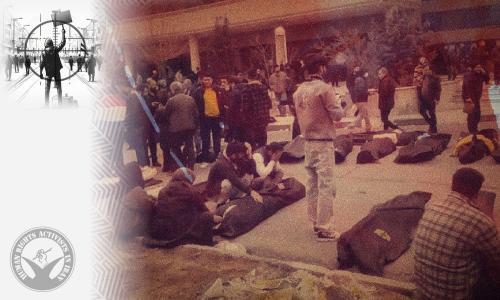
By the end of the twentieth day of the protests, the total number of confirmed deaths has reached 3,090, with 3,882 additional cases still under review. At least 2,055 people have been reported with severe injuries, and the number of arrests has risen to 22,123. The continuation of the nationwide internet shutdown, intensified diplomatic and security reactions at the international level, and the persistence of security and judicial crackdowns inside the country were among the most notable developments of the day.
Alongside developments on the ground, foreign reactions, centered on concerns over the human rights situation, the withdrawal of diplomats, and increased political pressure, continued. Domestically, government officials, while blaming foreign actors, emphasized a security-based narrative of the protests.
Disruption of Communications
The widespread shutdown and disruption of communications, which began on the evening of January 8, continued into the twentieth day and, according to reports, has entered its second week after more than 190 hours. During this period, access to both fixed-line and mobile internet in large parts of the country has faced severe restrictions, with messaging services, internet calls, access to public information, and media communications cut off.
The consequences of this situation have gone beyond limitations on information flow. Reports indicate difficulties for citizens in accessing basic services (including online banking and administrative services), heightened concern among families about the condition of detainees, and increasing obstacles to documenting and following up on human rights violations. At the same time, the internet shutdown has posed serious challenges to field verification and the collection of evidence.
Some foreign institutions and officials have explicitly emphasized that cutting communications can facilitate the concealment of violence and repression. Inside the country as well, scattered reports have emerged of increased security controls over access to information and intensified pressure on alternative communication channels.
In response to this information vacuum, HRANA today issued a public call urging citizens, eyewitnesses, and individuals with access to reliable documents, images, and videos to participate in the independent documentation of the protests. Emphasizing the vital role of citizen witnesses under conditions of internet shutdown, the call stressed the need to prevent the distortion of facts and to accurately record human rights violations.
International Reactions
At the international level, Iran remained at the center of attention. In the United States, the U.S. president stated that Iran had refrained from carrying out more than 800 execution sentences due to political pressure, remarks that were accompanied by renewed calls to halt violence against protesters.
In Europe, the cancellation of invitations to officials of the Islamic Republic to attend the Munich Security Conference drew widespread attention and was seen as a sign of Iran’s growing diplomatic isolation. At the same time, some governments expressed concern over the safety of their nationals in Iran and advised them to leave the country or reduce the level of diplomatic presence.
Continuing these reactions, a number of governments and international bodies once again emphasized the need for accountability for perpetrators of human rights violations. In this context, international documentation and accountability initiatives have received increased attention, a development directly linked to the situation on the ground and communication restrictions in Iran.
Alongside growing international focus on accountability, legal documentation projects have also gained greater importance. Within this framework, Spreading Justice, Hrana’s database of human rights violators in Iran, announced that information received about human rights violators, after multi-layered verification, will be recorded in the form of documented case files and legal analyses, to serve as a basis for international legal action and to counter the systematic impunity of human rights violators.
Government Responses
In response to external pressure, Iran’s Ministry of Foreign Affairs condemned the G7 statement on the suppression of protests as “interventionist.” At the same time, Iranian officials have sought to justify the crackdown by emphasizing security imperatives and asserting its legal basis, while rejecting or downplaying international criticism.
Meanwhile, in several high-profile cases involving detainees, Iran’s judiciary has stated that the charges do not necessarily carry the death penalty. At the same time, law enforcement and judicial authorities have continued to emphasize a policy of “swift and harsh” responses to protests, a stance that has intensified concerns over escalating violence, mass arrests, and mounting pressure on detainees’ families.
Statistics
By the end of the twentieth day, based on aggregated recorded data:
- Number of protests recorded: 619 (across 187 cities in 31 provinces)
- Total confirmed deaths: 3,090 (ff these, at least 2,885 were protesters, 165 were government/security forces, and 21 were non-protesting civilians)
- Minors (under 18) among the deceased: at least 19
- Deaths under review: 3,882
- Severely injured: 2,055
- Arrests: 22,123 cases
-Broadcast forced confessions: 132 cases
Conclusion
The twentieth day was marked by the continuation of the nationwide internet shutdown, which entered its second week, alongside escalating diplomatic and security pressure on the Islamic Republic. Internationally, developments ranging from formal meetings to governments advising their nationals to leave Iran reflected growing concern over the situation in the country. Domestically, the persistence of hardline security and judicial positions has reinforced fears of increased violence and intensified repression.