 |
 |
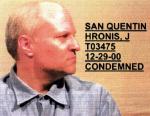
| USA - Jeffery Lee Hronis (2000 photo) (CA) |
|
USA - California. Supreme Court Reverses Jeffery Lee Hronis’ Death Sentence
April 20, 2026: April 20, 2026 - California. California’s Supreme Court Reverses Jeffery Lee Hronis’ Death Sentence
Questions Defendant’s Ability to Act as Own Attorney
The justices upheld the underlying murder conviction of Hronis.
California’s Supreme Court on April 20 reversed a 26-year-old death penalty sentence, concluding that a trial judge should not have allowed a defendant suspected of mental incompetence to represent himself in the penalty phase.
The unanimous court held that a California legal standard adopted in 2012—well after a jury sentenced Jeffery Lee Hronis to death—outlining when a judge can deny defendants’ requests to act as their own attorneys is retroactive.
While vacating Hronis’s sentence, the court upheld his underlying conviction for the 1985 kidnapping, rape and murder of 35-year-old Linda Ann Canady. The justices also affirmed the conviction—and death sentence—of Hronis’s co-defendant, John Anthony Bertsch.
Hronis and Bertsch were found guilty by two juries in a combined trial of kidnapping Canady from a Sacramento mall parking lot and dumping her body in Imperial County.
After authorities arrested Hronis for Canady’s murder, he told his attorneys and the court that God had assured him he would “be delivered,” or freed, from the charges against him and declined to help his counsel prepare for a possible penalty phase. Two court-appointed doctors determined Hronis was competent to stand trial.
The jury found Hronis guilty of first-degree special circumstance murder on Aug. 23, 2000. Hronis told the court that he didn’t want to put on a defense during the penalty phase, saying he’d rather “be with Jesus” than wait in prison while his conviction was appealed. His attorneys filed motions challenging Hronis’s mental competency.
A court-appointed psychologist noted Hronis’ religious “fervor” but found nothing to suggest he couldn’t make reasonable decisions about his case or help his attorneys. The judge declined to find Hronis incompetent and subsequently granted his request to represent himself in the penalty phase, with his attorneys standing by.
In his automatic appeal to the California Supreme Court, Hronis argued that, even though a judge found him competent to stand trial, he shouldn’t have been declared competent to act as his own attorney in arguments over the death penalty. The high court agreed, citing its 2012 opinion in People v. Johnson that judges may apply a higher competency standard for self-representation than for standing trial.
The Johnson standard must apply to cases—including Hronis’s —that are not yet final on appeal, Guerrero wrote.
“A finding of retroactivity to nonfinal cases would not unduly impact the general administration of justice or unfairly undermine the reasonable reliance of parties on the previous law,” Guerrero added.
Using that standard, it’s “reasonably possible,” the judge’s error in allowing Hronis to act as his own lawyer affected the jury’s decision to sentence him to death, she wrote.
Hronis was represented by Lincoln attorney Mark Cutler, who did not immediately return a message seeking comment. A spokesperson for Sacramento County District Attorney Thien Ho did not immediately respond to a message.
The Supreme Court rendered its decision in The People v. John Anthony Bertsch and Jeffery Lee Hronis, No. S093944.
https://www.law.com/therecorder/2026/04/20/california-high-court-reverses-death-sentence-questions-defendants-ability-to-act-as-own-attorney/?slreturn=20260422103021 (Source: law.com, 20/04/2026)
|