|
IRAN - UN: report on the crackdown on the January protests.
March 16, 2026: March 16, 2026 - IRAN. UN: report on the crackdown on the January protests.
UN Special Rapporteur: Islamic Republic Responded to January Protests with Gunfire, Internet Shutdowns, and Threats of Execution
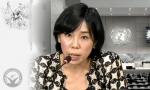
Mai Sato, the United Nations Special Rapporteur on the human rights situation in Iran, in her latest report to the Human Rights Council, has highlighted the violent suppression of nationwide protests in January, widespread internet and communications shutdowns, and the worsening human rights crisis in Iran following military attacks by Israel and the United States. She emphasized that the use of lethal force against protesters, concealing the scale of the crackdown through communications blackouts, and the use of charges carrying the death penalty to silence dissent have been key elements of this crisis.
According to HRANA, Mai Sato’s latest report, presented today, Monday, March 16, at the 61st session of the United Nations Human Rights Council, reviews the human rights situation in Iran between January 2025 and February 2026. However, its main focus is the nationwide protests that began on December 28, 2025.
Sato states that “severe economic hardship ignited demonstrations that rapidly spread into a nationwide movement spanning all 31 provinces, with people from diverse ethnic, religious and socioeconomic backgrounds, including children, demanding fundamental change in governance.”
In the report, Iran’s government’s response to the protests is described as “some of the most severe violence deployed against protesters in
recent history.” Sato writes that she has received numerous accounts indicating the excessive and lethal use of force against protesters, including the use of military weapons and shotguns, firing from elevated positions, and targeting vital areas of the body such as the head and chest. She stresses that shooting into unarmed crowds and the use of lethal force are incompatible with international standards and states that the government’s official narrative portraying the protests as “terrorist” activity is not supported by the available evidence.
One of the most important sections of the report concerns the number of those killed. According to a statement by Iran’s Supreme National Security Council on January 22, authorities of the Islamic Republic announced the death toll at 3,117 people. However, Mai Sato’s report—citing HRANA—states that at least 7,015 confirmed deaths had been recorded by February 15. This figure includes at least 6,508 protesters, among them 226 children, and 214 members of security forces. In addition, the report notes that 11,744 other deaths are still under review. Sato emphasizes that even this conservative estimate is more than twice the official figure released by the government, and that the gap between official statistics and field data adds to the suffering of families who are still searching for their loved ones.
In one case specifically highlighted in the report, Sahand Naseri, a 15-year-old teenager who was shot in the chest and killed during protests in Karaj, is presented as a symbol of a young generation that took to the streets with hope for the future but was met with deadly violence. Sato uses this case to illustrate the deep gap between the government’s official narrative and the human reality of the protests.
The report also presents a concerning picture of the situation of detainees. Sato writes “the total number of current detainees connected to the nationwide protests remains unknown, leaving families with no certainty about whether their loved ones are alive and, if so, where they are being held.” According to the report, Iranian domestic media reported on January 16 that around 3,000 people had been arrested, but data collected by civil society organizations suggests “that total arrests may run into tens of thousands, with arrestees including protesters, medical professionals, children and students, artists and writers, lawyers, journalists, and human rights defenders. By mid-February, the judiciary’s spokesperson confirmed over 10,500 people had been referred for prosecution and nearly 9,000 indicted. Most worryingly, at least 30 individuals, including two children aged 17, are reportedly facing the death penalty in connection with the nationwide protests, following expedited judicial proceedings.”
Another major focus of the report is the communications blackout and internet shutdown. Sato states that on January 8, 2026, the Iranian government “imposed a near-total shutdown of telecommunications services nationwide. Both international connectivity and significant elements of domestic communications were disrupted. The shutdown significantly disrupted protest coordination and access to emergency services, financial transactions and essential communications, leaving many families unable to determine the fate or whereabouts of detained or injured relatives for days. The imposition of telecommunications shutdowns in parallel with the use of force, discussed below, creates conditions that shield human rights violations from scrutiny.”
Sato describes this situation as evidence of the use of “communications infrastructure as an instrument of repression.” She considers the National Information Network, control over access to the global internet, the collection of user data, and new restrictive policies to be part of a broader strategy in which access to information is treated not as a right but as a revocable privilege. The report adds that the blackout has also had severe economic consequences, with some small and medium-sized businesses losing up to 80 or 90 percent of their income.
Another prominent part of the report addresses violations of medical neutrality. Sato states that during the protests, hospitals and medical centers, rather than serving as safe spaces for the wounded, became sites of repression, identification, and arrest. The report notes that security forces entered hospital wards, beat or detained doctors and nurses, confiscated patient lists, and even prevented the treatment of injured individuals. In a stark conclusion, Sato writes that the result has been the creation of a healthcare environment in which “many injured protesters abandoned treatment out of fear of arrest,” and saving lives has effectively been criminalized.
The report also addresses the broader human rights situation in Iran and points to an unprecedented increase in executions. According to the report, at least 1,639 people were executed in Iran in 2025, a figure that represents a significant increase compared to the previous year. Sato warns that security-related charges carrying the death penalty, such as moharebeh (enmity against God), efsad-e fel-arz (corruption on earth), and espionage, are increasingly being used as tools to suppress political dissent, and that the same pattern is now visible in cases related to the nationwide protests.
In the final section of the report, Sato also refers to developments that occurred after the report had been finalized, noting that the human rights situation in Iran has worsened following military attacks by Israel and the United States. She describes these attacks as inconsistent with the United Nations Charter and as violations of the principle prohibiting the use of force, while also expressing concern about Iran’s retaliatory attacks in the region. According to the report, attacks on civilians, schools, and medical facilities have been among the incidents reported following these developments. At the same time, conditions in prisons have also deteriorated, including severe shortages of food and medical services for prisoners. Sato stresses that “illegal military intervention should not be mistaken for a solution to the human rights situation in Iran,” and that any resolution must be based on the rule of law, the will of the Iranian people, and full accountability for documented violations.
In conclusion, the UN Special Rapporteur describes the nationwide protests of winter 2025 as a defining moment in Iran’s human rights crisis—a moment that, in her words, has exposed the structural nature of repression in the Islamic Republic: from the use of lethal force against protesters and internet shutdowns to attacks on hospitals, forced confessions, mass arrests, and the use of the death penalty to intimidate society. She calls on Iranian authorities to release all detainees held for the peaceful exercise of their fundamental rights, clarify the fate of the missing, end internet shutdowns and digital repression, and conduct independent and impartial investigations into the killings and other violations that have occurred.
It is worth noting that gatherings and strikes by shopkeepers and bazaar merchants began on Sunday, December 28, in Tehran, and after two days expanded beyond markets and commercial centers. With the participation of students, citizens, and various social groups, the protests became one of the largest waves of demonstrations in recent years. Following the crackdown on the protests by law enforcement and security forces, thousands of people were killed or injured, and tens of thousands were arrested or summoned by security institutions. For more information, readers can refer to HRANA’s comprehensive report titled “Crimson Winter,” which documents the first fifty days after the start of Iran’s nationwide protests.
https://www.en-hrana.org/un-special-rapporteur-islamic-republic-responded-to-january-protests-with-gunfire-internet-shutdowns-and-threats-of-execution/
https://irannewsupdate.com/
https://english.shabtabnews.com/2026/03/16/un-report-says-iran-crushed-protests-with-force-arrests-and-digital-curbs/ (Source: Hrana)
|