 |
 |
| IRAN - The Crimson Winter |
|
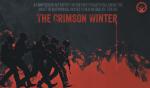
IRAN - Hrana Report: The Crimson Winter
February 23, 2026: February 23, 2026 - IRAN. Hrana Report: The Crimson Winter
A 50 Day Record of Iran’s 2025–2026 Nationwide Protests
Published on February 23, this comprehensive report examines developments during the first fifty days following the eruption of nationwide protests in Iran on December 28, 2025, providing a detailed account of the unfolding events and the state response from December 2025 through February 2026.
Compiled through a coordinated, multi team documentation effort across HRA’s news agency HRANA, Spreading Justice, the Pasdaran Documentation Project, and the Statistics Department, the roughly 1,350 pages report preserves a structured record of the opening phase of Iran’s 2025–2026 nationwide protests and the state response.
The findings are derived from more than 143,330 HRANA reports drawn from confidential and open sources, collected, verified, and analyzed during the 50-day window.
Why this report, and why now?
Large scale protest cycles generate two parallel dynamics: an unprecedented volume of documentation and a coordinated effort by state authorities to restrict communications, shape narratives, and intimidate sources. In this environment, the central risk is not only undercounting violations, but losing the ability to verify identities, locations, dates, and patterns while evidence remains recoverable.
This report adopts a disciplined human rights methodology centered on documenting minimum verifiable cases rather than publishing maximal estimates. It presents findings that can be substantiated through corroborated evidence, even where the broader scale of violations likely exceeds what can be confirmed in real time. The publication is intended both as a public record and as an archival foundation for legal analysis and future accountability processes.
What the report contains
The report maps the first fifty days of protests by addressing core accountability questions:
- How did protests evolve and spread geographically
- How did state forces respond, and through what structures
- What forms of harm occurred
- How did blackout conditions affect the availability, quality, and verification of information
- How was content authenticated and cross checked in an environment shaped by surveillance, source risk, and restricted access
- How were risks from manipulated, fabricated, or AI generated content identified and mitigated within the verification process
- How can documented patterns be legally characterized
- How can records, especially identities of victims and detainees, be preserved without increasing risk
Sections analyze protest trends and geography, university mobilization, slogans, the structure and tools of repression, patterns of violations including killings, injuries, arrests, coerced confessions, pressure on families, and attacks on medical neutrality, as well as legal analysis, international responses, and how HRA documentation initiatives mobilized.
At the center of the report are two core pillars: the verified accounting of those killed, including children, and the documented accounting of detainees, including minors, students, and individuals subjected to group arrests.
Key Findings
Geographic scope
- Total protest locations: 682
- Unique cities: 203
- Unique provinces: 31
The geographic distribution demonstrates that both protest activity and state response were nationwide in scope.
Student mobilization
- University protests documented: 55
- Protesting universities: 36
Universities emerged as central civic spaces within the broader protest movement and the state response.
Fatalities: scale and composition
Across the first fifty days covered by this report, consolidated documentation records:
- Protesters killed: 6,488
- minors killed, counted separately and not included among protesters: 236
- Civilians killed, non-protester: 76
- Military and government forces killed: 207
- Total fatalities: 7,007
An additional 11,744 cases remain under review and are not included in confirmed totals. Separately, HRA documented eight civilian deaths resulting from clashes between civilians in public. The categorical separation is deliberate. Distinguishing protesters, minors, non-protester civilians, and government or pro-government fatalities prevents analytical conflation and enables clearer legal and statistical interpretation. The figures reflect a minimum verifiable record compiled under conditions where comprehensive access is not possible.
Injuries
- Injured military and security forces: 4,884
- Injured civilians: 25,846
These figures contextualize the breadth of harm beyond confirmed fatalities and illustrate the overall magnitude of violence.
Arrests
- Total arrests: 53,777
- Children, teenagers, and school students arrested: 555
- University students arrested: 147
Arrest figures include both individually identified cases and verified group arrests, reflecting documentation realities in which names are often unavailable or unsafe to publish.
Forced confessions
- Documented forced confessions: 369
The report treats coerced confessions as a systematic instrument of intimidation and narrative control within a heavily surveilled and restricted media environment.
Summonses
- Documented summonses: 11,053
Summonses function as a parallel mechanism of legal pressure, extending state control beyond those formally detained.
The List of the Deceased: Methodology and Protection
Appendix A contains the list of the deceased. Publication decisions are governed by a protection centered framework that weighs the public interest in disclosure against the risk of retaliation for relatives, witnesses, and HRANA’s network.
Where names are published, they are paired, where possible, with core identifiers including age, location, and documentation anchors used in verification. Entries are also paired with sources. Where a third-party source is listed as the primary source, HRANA has independently verified the information through its reporting network.
Where publication would create unacceptable risk, cases are reflected in verified totals and preserved within secure documentation systems for accountability purposes.
The list is the product of a structured, cross-checked verification methodology designed to preserve an accurate public record without increasing danger to those inside the country.
Legal Assessment and Accountability Relevance
The report includes a preliminary legal assessment, framing documented patterns as potential violations of international human rights law and, where applicable thresholds are met, international criminal law.
Patterns of lethal force, mass arrests, coerced confessions, and related violations are analyzed against legal standards governing the right to life, due process, freedom of expression and assembly, and protections against torture and cruel, inhuman, or degrading treatment.
By grounding its legal analysis with verified names, dates, locations, and corroborated patterns, the report connects documentation to concrete pathways for accountability.
https://www.en-hrana.org/the-crimson-winter-a-50-day-record-of-irans-2025-2026-nationwide-protests/ (Source: Hrana)
|