 |
 |
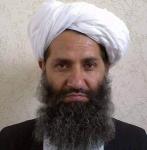
| Hibatullah Akhundzada is the supreme leader of Afghanistan |
|
AFGHANISTAN: TALIBAN LEADER AUTHORISES KILLING OF 11 CATEGORIES OF PEOPLE UNDER NEW PENAL CODE
February 2, 2026: Taliban supreme leader Hibatullah Akhundzada has authorised the killing of 11 categories of people under a newly endorsed Taliban penal code, granting himself sole authority to approve executions deemed necessary for what the movement describes as the “public interest”.
Article 16 of the Taliban’s new penal code allows for “discretionary execution” (ta’zir by death) of individuals accused of a broad range of offences, including armed opposition to the Taliban, promoting beliefs considered contrary to Islam, sorcery and repeat criminal acts, according to the text reviewed by Amu TV.
The code marks a significant departure from Afghanistan’s previous legal framework by explicitly permitting executions with the personal approval of the Taliban leader, referred to in the document as the “Imam”, a title commonly used by the Taliban to denote Akhundzada.
Under the article, execution may be ordered against individuals accused of repeatedly committing what the code describes as “corruption”, a term that is not defined. It also authorises killing those labelled as sa‘i bil-fasad – a category that includes armed opponents of the Taliban, highway robbers, individuals accused of sodomy, sorcerers and others deemed to cause “general harm” to society where, according to the code, reform is considered impossible without death.
The article further permits execution of anyone who kills using a weapon and those who “defend false beliefs contrary to Islam”.
Another provision allows the killing of individuals who promote beliefs considered un-Islamic, including leaders and teachers of Islamic sects outside Sunni Islam. The code refers to followers of non-Sunni schools as mubtadi‘ (innovators), and authorises execution of their leaders or educators if deemed necessary for public interest. The document does not explicitly address the status of Shi’ite Islam, the second-largest religious denomination in Afghanistan.
Additional clauses authorise the killing of individuals accused of sorcery and those labelled zindiq – defined as people who outwardly appear Muslim but are judged to secretly reject Islam – categories that had no clear precedent in Afghanistan’s former legal codes.
A second subsection of Article 16 permits the execution of four further groups, including individuals accused of repeated sexual relations outside what the Taliban define as lawful marriage, repeat offenders accused of sodomy, those who repeatedly kill by strangulation, and repeat thieves.
All executions under the article require the explicit approval of the Taliban leader, according to the code.
The provisions are listed under discretionary punishments rather than fixed Islamic penalties (hudud), granting broad interpretive authority to the Taliban leadership.
The penal code has prompted widespread criticism from Afghan activists, legal experts and religious figures, who say the provisions are vague and could be used to target political opponents, religious minorities and marginalised groups.
Responding to the criticism, Taliban Higher Education Minister Neda Mohammad Nadim on February 1st dismissed opponents of the code as “infidels” during a speech at a religious graduation ceremony in Paktia province.
“These laws are not written for infidels to object to,” Nadim said, according to an audio recording broadcast by the Taliban-run national broadcaster. “Now that the penal code has been approved, they say it is too harsh and raise their voices to distance people from Islamic law and Islam.”
The Taliban justice ministry has previously warned that protesting or criticising Taliban laws constitutes a crime, saying all legislation issued by the group is in accordance with Islamic law.
The penal code, endorsed by Akhundzada, consists of a preamble, three sections, ten chapters and 119 articles, and is expected to be published in the Taliban’s official gazette.
Human rights groups say Article 16 places wide segments of Afghan society at risk, particularly religious minorities and those accused of vaguely defined moral or political offences, in a country where the Taliban have steadily expanded their interpretation of Islamic law since returning to power in August 2021. (Source: Amu tv, 01/02/2026)
|