 |
 |
| IRAN - Alireza Rahimi’s Killing |
|
IRAN - IHR Report on 25th day of protests
January 21, 2026: January 21, 2026 - IRAN. IHR Report on 25th day of protests
Twenty-five days since the start of the nationwide protests in Iran and fourteen days after the internet blackout, IHR continues to receive information and eyewitness accounts, revealing the scale of the large-scale killing of protesters by state forces. IHR has previously stated that Information received from eyewitnesses, families and other citizens, together with other available evidence, indicates that the number of protesters killed may exceed even the highest media estimates.
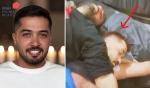
An eyewitness who participated in the nationwide protests in the Tehranpars neighbourhood of Tehran, has shared information with IHR about the bloody crackdown on protests on 8 January and the state killing of Alireza Rahimi, a 26-year-old protester. The witness also quoted another witness in describing how within the space of one hour that night, the bodies of around 120 protesters were brought to one Tehranpars hospital.
he protester and eyewitness, now outside Iran, told IHR: “On 8 January, at around 10 pm, a large gathering formed outside the Basij base near 202 alley in Tehranpars. From the rooftop of the IRGC telecommunications building, Alireza Rahimi was shot at close range in the back of the head. Although it was birdshot, it killed him because it exploded in his head. Alireza’s uncle and his twin brother were with him and took him to hospital.”
After Alireza was transferred to a hospital, the eyewitness and other protesters moved towards 126 Police Station at Sevom Square in Tehranpars, on Rashid Street. According to the eyewitness, the officers were gripped by fear due to the size of the crowd.
In describing the atmosphere on 8 January, he says: “I’ve never seen a crowd like it. Perhaps 100,000 people came out onto the streets in Tehranpars alone. At Tirandaz junction, officers began firing at protesters from the top of the 126 Police Station building. At first they used blanks, but then they started firing live ammunition. They were aiming at protesters’ heads. From where I was standing, I saw with my own eyes that nearly 40 people were killed. Most of them were young, and three were women. One of the station’s officers later said that three officers had also been killed. He said that more than 80% of the station’s officers wanted to surrender to the protesters, but their commanders stopped them.”
The eyewitness described the crackdown later that evening: “By 10.30 pm, it felt as though Tehranpars had slipped out of the government’s control and into the hands of the people. Everything changed with the arrival of the NOPO (Counter-terrorism Special Force) units and the Fatemiyoun Division. They showed no restraint. They had come to massacre people. It made no difference to them whether someone was a woman or a man, old or young. They raked the protesters with gunfire. They had Uzi and AK47 weapons. Most men were targeted in the head and women in the heart. It was a horrific scene. Tear gas was also constantly fired. Protesters managed to take some of the wounded to Arash Hospital at Sevvom Square in Tehranpars. One of my friends reported that, in just one hour, around 120 lifeless bodies of protesters were brought to this hospital.”
The Tehranpars protester also explained how Alireza Rahimi’s body was found: “After paying money to an ambulance driver at Behesht Zahra, Alireza’s family managed to find his body amongst the thousands of bodies inside the industrial sheds.”
Confirming published reports that families have been forced to pay to receive the bodies of killed protesters, the eyewitness said: “Two families of slain protesters were each charged 1.5 billion tomans (approx. 9000 euros) in order to receive their bodies. This was after the bodies had been kept in the Kahrizak morgue for six days. Another family, who were financially well off, were told they had to pay 3 billion tomans (approx. 18,000 euros) to receive their loved one’s body and also sign a statement saying their son had been a Basij member, which they refused. It seems like they check people’s bank accounts, and the wealthier someone is, the more they demand.”
He also reported severe overcrowding at Behesht Zahra cemetery in Tehran during the burials of protesters: “In the Behesht Zahra washing facilities, there was no room to move. I personally saw bodies being brought in by container. Every minute, one body was taken out. Section 327 of Behesht Zahra was filled in a single day. No one recited lamentations. Families clapped for their dead and chanted anti-government slogans. Alireza was buried in their family plot. He was laid to rest without prayers or religious ceremonies, and with his favourite music playing.”
The eyewitness spoke of his long friendship with Alireza Rahimi, remembering him as a warm, polite young man and a devoted football fan, loved by relatives and friends alike.
https://iranhr.net/en/articles/8545/ (Source: IHR)
|